U.S. court cases from 1971 to the present
by Demian
© March 8, 2017, Demian
Marriage has been the word applied to both ceremonial events and to legal contracts. The nature and form of both have changed through the centuries. Biblical marriage was a brutal event, women and children were treated as commodities. Governments took an interest in marriage in order to deal with points of law such as inheritance rights.
In the United States today, each state governs its own marriage laws. The legal provisions themselves number into the hundreds in each state, and more than 1,049 on the federal level. These laws cover almost every conceivable aspect of social interaction.
[See U.S. Federal Laws for the Legally Married.]
The history of marriage includes same-sex couples, sometimes openly. Before church marriages were performed for a man and a woman, according to the late Yale historian John Boswell in his landmark book Same-Sex Unions in Premodern Europe, ceremonies and liturgy had been first developed for same-sex couples, mostly male, in Europe throughout the medieval period.
[See: Media Resources: Ceremonial Marriage]
In many countries, there are records of individuals hiding their true gender in order to marry someone of the same biological sex. This was the case for Murray Hall, a prominent Tammany politician about the turn of the century. She masqueraded as a man over a 25-year period and married women twice.
During the twenties, black lesbian “butch/femme” couples of Harlem married each other in large wedding ceremonies. The couples obtained marriage licenses by masculinizing a first name or having a gay male surrogate apply for the license.
One of the earliest public forums on same-sex marriage was conducted by The Daughters of Bilitis in 1957. The event, titled “Is a Homophile Marriage Possible?” featured a psychotherapist who answered the question affirmatively.
By the 1960s, “covenant” services for some gay and lesbian couples were conducted by clergy in touch with the Council on Religion and the Homosexual.
“The first marriage in the nation designed to legally bind two persons of the same sex,” claimed an Advocate article published on June 12, 1970. Neva Heckman and Judith Belew were married in Los Angeles by Reverend Troy Perry. Because the couple could not get a state marriage license, the marriage was not, in fact, legally binding.
The Unitarian Church in June 30, 1984, voted to recognize and approve ceremonies celebrating same-sex unions. There have also been official marriage ceremonies performed by Buddhist, Episcopalian, Reconstructionist Jewish, Reform Jewish, Presbyterian, Quaker and others.
The reality for all the covenants, holy unions, hand-fastings or commitment ceremonies undertaken in America is that they have never been legally binding. This means that, while the love, caring and commitment are there, the couples are not protected from even the most basic of rights afforded legally married couples, such as the right to not testify against each other in court.
| Locations for Full and Equal Legal Marriage |
|
While all the rest of the U.S. bars legal marriage — via simple state law — some states have gone further.
Before November 2004, four states had anti-marriage constitutions, which had been used to legally argue against recognizing any non-marriage status, such as job benefits and Civil Unions for same-sex couples. The November 2004 election brought 11 more anti-marriage state constitutional amendments. Nine of the new amendments specifically include anti-domestic partner language.
[Please see our article: Legislative Reactions to Legal Marriage]
In those states that have anti-marriage amendments, either directly, or by implication, any Civil Union or partnership status, such as workplace benefits, could easily be legally challenged and made void.
A “Registered Partnership,” which can sometimes approximate legal marriage, is available in California, Denmark, Greenland, Iceland, the Netherlands, Norway, Sweden, Vermont, and the state of Washington. However, registrations offer unequal treatment, are usually not recognized by other countries or states and are, in reality, a second class status.
[See Registered Partnership]
[See Marrying Apartheid: The Failure of Domestic Partnership Status]
Many other countries provide various degrees of domestic partner benefits, but nothing close to the full, equal right of legal marriage. It is only by openly educating kin, friends, co-workers and neighbors, as well as with challenges to the legal exclusion of same-sex couples that marriage will become available.
|
Court Rulings in Favor of Legal Marriage Hawaii (Baehr v. Anderson) Alaska (Brause v. Alaska) Vermont (Baker v. Vermont) Massachusetts (Goodridge v. Dept. of Public Health) Iowa (Varnum v. Brien) California (In re Marriage Cases) Connecticut (In re Marriage Cases) Please see our article: State Legislative Reactions to Suits for Same-Sex Marriage |
| U.S. Court Cases for the Right to Marry |
|
1971 ________________________
Baker v. Nelson (Minnesota) 1973 ________________________ Jones v. Hallahan (Kentucky) 1974 ________________________ Thorton v. Timmers (Ohio) 1975 ________________________
Adams v. Howerton (Colorado) 1984 ________________________
DeSanto v. Barnsley (Pennsylvania) 1990 ________________________
Dean v. D.C. (District of Columbia) 1991 ________________________ Baehr v. Anderson (Hawaii) Case Won in 1996 1993 ________________________
Cable-McCarthy v. California (California) 1994 ________________________ Callender v. Corbett (Arizona) 1995 ________________________ Brause v. Alaska (Alaska) Case Won in 1998 1996 ________________________ Storrs v. Holcomb (New York) 1997 ________________________ Baker v. State of Vermont (Vermont) Case Won in 1999 2001 ________________________ Goodridge v. Dept. of Public Health (Massachusetts) Case won in 2001 2002 ________________________
Lewis et. al. v. Harris et. al. (New Jersey) 2003 ________________________ Harold Donald Standhardt and Tod Alan Keltner v. State of Arizona (Arizona) 2004 ________________________
? v. ? [Carmen and Dorothy Apodoca sue Orange County] (California) 2005 ________________________
Smelt v. Orange County (California) 2008 ________________________ In re Marriage Cases (California) Case Won in 2008 2009 ________________________
Gill v. Office of Professional Management (United States) Case Won in 2010 in Federal District Court 2010 ________________________
Pedersen v. Office of Professional Management (U.S.) 2014 ________________________
Brenner v. Armstrong (consolidated April 21, 2014 from Brenner v. Scott and Grimsley v. Scott) - Case Won in 2015 The “?”s indicate suit names not mentioned in news reports.
Please contact us if you know the names of these cases. |
| Proposed Pro-Marriage Bills |
|
Bills for Legal Marriage 1975: Washington, D.C. 1990: California - now has legal marriage. 1991: Massachusetts - now has legal marriage. 1996: Nebraska 1997: Maryland, Nebraska, Oregon, Washington, Wisconsin 1998: Maryland, Rhode Island 1999: Rhode Island, Massachusetts 2000: Maryland, Rhode Island, Vermont 2001: Montana, New York, Rhode Island 2003: Montana 2004: California, Rhode Island 2005: California, Maine, Oregon, Rhode Island 2006: California, New Jersey, Rhode Island, Vermont 2007: Washington 2007: District of Columbia
Bills for Civil Unions / Domestic Partnerships |
In America, same-sex couples have been pressing for the right to marry since 1971. The following timeline shows the long, noble history of the court challenges and related events impacting the struggle for legal marriage.
| 1971 | |||
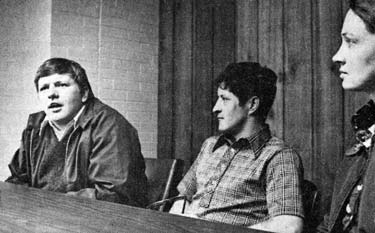
The first legal marriage challenge (exact date not known) was launched by Richard John Baker and James Michael McConnell (shown here) in Minnesota. The plaintiffs contended in Baker v. Nelson that an absence of a specific prohibition on same-sex marriage signified a legislative intent to recognize them. They also argued that the state marriage statute, interpreted to provide only for opposite-sex marriages, is unconstitutional based on the Ninth and Fourteenth Amendments, denying them liberty and property without due process and equal protection of the law. In finding against plaintiffs, in October 1971, the State Supreme Court judge said: “The institution of marriage as a union of man and woman, uniquely involving the procreation and rearing of children within a family, is as old as the book of Genesis.” Besides using the Bible as substitute for any real investigation of marriage law history, the court also dismissed the couple’s claim of denial of due process and equal protection with a simple, “we do not find support for [these arguments] in any decision of the United States Supreme Court.” The court also claimed that the Loving miscegenation case, Loving v. Virginia, (1967), which shattered the same-race-only marriage laws, could not be used as precedent for overturning a sex restriction stating that “in common sense and in a constitutional sense, there is a clear distinction between a marital restriction based merely upon race and one based upon the fundamental difference in sex.” It was not explained why the court felt biological sex was a “fundamental” difference and race was not. Loving was, however, successfully argued in Hawaii, Baehr v. Anderson (1991), in Alaska, Brause v. State of Alaska (1995), and in Vermont Baker v. State of Vermont (1997). While they were denied a marriage license from Hennepin County, Minnesota, in 1971, McConnell and Baker did obtain a marriage license in Mankato, and were married by a Methodist minister in the Twin Cities. The couple claim that their marriage in Mankato is legal, since it occurred before any legal rulings were made against same-sex marriage. It is unlikely that this particular line of reasoning would hold in court simply because the state has effectively annulled same-sex marriage through subsequent rulings. In 1976, the couple sued the Veterans Administration demanding an increase to Baker’s educational benefits, claiming McConnell was his dependent spouse. The 8th U.S. Circuit Court of Appeals rejected that suit. Baker again sued on behalf of his partner to have their 1971 marriage legally recognized by the Internal Revenue Service, claiming that the couple was owed a refund of almost $800. U.S. District Judge Joan Ericksen dismissed the suit on January 3, 2005, saying the two were not lawfully married in Minnesota. Baker stated he intended to appeal.
The court argued that because of an exception to the absolute prohibition on sex discrimination — that of unique physical characteristics of each of the sexes rather than gender per se — the suit fell within that exception because two males cannot produce children. The court conceded that many heterosexual married people cannot produce children, but called that merely an imperfection in the law and that physical characteristics themselves do not completely resolve the question. The court said that the appellants were not denied a marriage license because of their sex; rather they were denied a marriage license because of the nature of marriage itself. Singer, who later changed his name to Faygele benMiriam, is interviewed about the case in the documentary video The Right to Marry. Wisconsin - 1971 Suit Female partners Donna Berkett (or possibly Burkett) and Manonia Evans filed a suit against county clerk Thomas Zablocki for refusing them a marriage license in Milwaukee. They withdrew it before the case was heard. |



| 1976 |
|
Illinois - 1976 Refused License, Protested, then Jailed Starting in October of 1975, Chicagoians Nancy Davis and Toby Schneiter, staged repeat sit-ins at the Marriage License Bureau, and kept being jailed. [See Timeline item Illinios - 1975 above.] By the summer of 1976, the pair had spent more than 120 days in jail. They were sentenced to a year in prison, but only served 6 months in Cook County Jail. They were released in February, 1977. Davis found another woman to marry, engaged in yet another sit-in, and received yet another 364-day sentence. |
| 1984 |
|
Pennsylvania - 1984 Suit for Common-Law Status John DeSanto sued his former partner William Barnsley when they split up. He claimed in DeSanto v. Barnsley that since Pennsylvania recognized common-law marriages, their long-term relationship should likewise be recognized. The court did not agree, and threw the case out, stating that if the Pennsylvania common-law statute was to be expanded to include same-sex couples, the legislature would need to make that change. To date, the few states that have common-law marriage statutes apply them only to opposite-sex couples. [Please see our article: Common-Law Marriage States] California - 1984 1st Domestic Partner Benefits Berkeley, California, became the first U.S. city to extend spousal benefits to live-in, same-sex partners of city employees. |
| 1987 |
|
National - 1987 Viewed as Civil Right The American Civil Liberties Union commits to eliminating legal barriers preventing gay men and lesbians from marrying. Washington, D.C. - 1987 Mass Demonstration A mass ceremony and demonstration, called The Wedding, took place on the steps of the Internal Revenue Service Building as a part of the March on Washington on October 10. Male couple J. Carey Jenkin and Walter Wheeler overcame strenuous objections to convince the March committee to schedule the event. About 2,000 couples participated with 5,000 onlookers. Billed as a “re-commitment ceremony,” it bore the theme “Love makes a family. Nothing else, nothing less!” |
| 1989 |
|
National - 1989 Viewed as Legal Right The San Francisco Bar Association issues a statement in support of same-sex marriages. Illinois - 1989 Human Rights Complaint A Chicago male couple, Rex Wockner and Paul Varnell, file complaints with the Illinois Department of Human Rights charging the state with sex discrimination because it refuses to allow same-sex marriages. |
| 1990 | |
|
California - 1990 Attempted Pro-Marriage Bill Endorsed by the California Bar Association and the Bar Association of San Francisco, a bill was filed in the California state legislature to allow for same-sex marriage.
Partners Craig Dean and Patrick Gill sued for marriage arguing that the D.C. marriage laws are gender neutral and that the denial also violates local human rights laws. Dean v. D.C. was rejected by both a lower court and the appeals court. The court cited previous cases as well as the Bible (which must be noted is not a legal document), and alleged a legislative intent to disallow same-sex marriages. The D.C. Human Rights Commission testified that the marriage bureau violated city law by discriminating on the basis of sexual orientation. The author of the city’s Human Rights Act testified that the Council did not intend to forbid same-sex marriage. However, the court noted that the District had previously rejected a proposal explicitly recognizing same-sex marriage. The couple finally lost the case in 1995. Illinois - 1990 Attempt to Apply for License On February 14, 1990 (Valentine's Day), Buddy Bell and Dale Fecker applied for and were denied marriage licenses at the Cook County clerk’s office in Chicago. Bell and Fecker, as well as Jeff Graubart, Dan Ware, Danielle Karczewski, Erica Chu, and Nick Ferrin protested and were arrested. About 400 protesters had already rallied outside the Bureau. The Cook County State’s Attorneys Office indicated it was not going to prosecute, and the judge had the arrests stricken. New York - 1990 Suit for Estate When a New York man died he left the bulk of his estate to a former partner. His partner at the time he died sued as “surviving spouse,” under New York inheritance law. In the Matter of Estate of Cooper the court concluded that only a lawfully recognized husband or wife qualifies as a “surviving spouse.” Further, it stated that “persons of the same sex have no constitutional rights to enter unto a marriage with each other.” Ohio - 1990 Suit The Fullington v. Ohio suit for legal marriage was dismissed by an Ohio county municipal court in October 11, 1990. It was brought by Russ Stalk and David Fullington. |

| 1991 | ||
|
Massachusetts - 1991 Attempted Pro-Marriage Bill The Massachusetts Coalition for Lesbian and Gay Civil Rights campaigned to pass a same-sex marriage bill. They found a handful of Democratic co-sponsors.
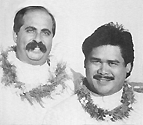
Three same-sex couples — Genora Dancel and Ninia Baehr (right), Joseph Melillo and Pat Lagon (below), and Tammy Rodrigues and Antoinette Pregil — joined in Baehr v. Lewin (which became Baehr v. Miike and later Baehr v. Anderson) to sue for marriage in Hawaii. The case, instigated by activist Bill Woods, proposed that the state’s refusal to issue a license presumptuously violates Hawaii’s Equal Rights Amendment (ERA) which bars discrimination on the basis of sex.
[See Hawaii Court Finding]
Legislators instituted “Reciprocal Beneficiaries” in 1997 with hopes of circumventing the 1996 Hawaii lower court order allowing legal marriage for same-sex couples. A history of Reciprocal Beneficiaries is included here:
This law offered 50-60 benefits (the state itself appears not sure how many). The most important, medical benefits, was eliminated by Hawaii’s attorney general who claimed that no business is required to offer domestic partner benefits, thereby gutting the substance of this new law.
While domestic partner status is of value to those who have no other means of protecting their family, it is unequal to the breadth and depth of the thousands of laws legal marriage triggers, and creates a second-class status. On April 29, 1997, the Hawaii legislature passed an amendment to the Hawaii Constitution which stated that “The legislature shall have the power to reserve marriage to opposite-sex couples.” In November 1998, the constitutional ballot measure ratified existing state law that permits (although it did not require) the legislature to restrict marriage to opposite-sex couples. While not an anti-marriage constitutional amendment, it was used as the excuse to deny legal marriage in the final ruling from the Hawaii Supreme Court. Only a constitutional amendment — one stripping civil rights from homosexuals — could allow the continued denial of same-sex marriage licenses. This requires either a two-thirds vote of the legislature plus ratification by a popular vote, or a constitutional convention. In 1998, radical right extremists financed a ballot measure to hold a convention. It could also have been used to devastate rights for women because the marriage case is supported, in large part, by Hawaii’s sex discrimination law. Because some conservative corporate interests backed the extremists, pro-union organizations were concerned about loosing other protections also covered by the Hawaii Constitution. The ballot measure failed to call for a convention, but did support another measure which said that the legislature could define who is able to get legally married. The Hawaii State Supreme Court made a final ruling in December 9, 1999 which stated that “The [1997] marriage amendment has rendered the plaintiffs’ complaint moot.”. This finding is bewildering in that the court did not seem to apply the same anti-discrimination standards it applied in earlier rulings — that is, the state had no right to stop same-sex legal marriage — when later considering the marriage amendment. An amendment which is clearly in contradiction to Hawaii’s constitutional civil rights protections. As no federal Constitutional issues were raised, the case can not be brought to the U.S. Supreme Court. This case was supported by the Marriage Project-Hawaii (was HERMP). The co-counsel in the case is Lambda Legal Defense and Education Fund (LLDEF). MP-H co-director Sue Reardon, LLDEF director Kevin Kathcart, and LLDEF’s Marriage Project head Evan Wolfson are interviewed in the video The Right to Marry. |

| 1992 |
|
Pennsylvania - 1992 Common-Law Status Denied Joey Carney and Devin Michaels of Pittsburgh believed they were married under Pennsylvania common law. State Solicitor Bob Weinert had told the men they could file a notarized “statement of marriage,” which was accepted at the registrar’s office. Weinert later reversed himself in view of a prior state Supreme Court decision that same-sex marriages were not legal. [Please see our article: Common-Law Marriage States] |
| 1993 | ||
Partners Benjamin and Marcial Cable-McCarthy sued for marriage in Los Angeles, California on April 18, 1993. The case, Cable-McCarthy v. California, lost the first round and then was denied a review on appeal to the California Supreme Court. Rather than pursue the case, the couple awaited a resolution in the Baehr v. Anderson Hawaii case, which subsequently lost in 1999. Their wedding ceremony is one of several seen in the video The Right to Marry, and they are also in our Committed Couples Gallery I. Florida - 1993 Suit A Florida couple, Shawna Underwood and Donia Davis sued for marriage. In Underwood v. Florida, the court upheld the clerk’s refusal to issue a license. An appeal was believed to be on hold pending a final decision in Hawaii, however, no action has been taken since the Hawaii case was finished in 1999.
Texas State Representative Glen Maxey introduced legislation that would extend equal marital rights to same-sex partners. It did not get out of committee. Wisconsin - 1993 Suit? A same-sex marriage case was brought in Wisconsin and was believed to be on hold pending a final decision in Hawaii, however, no action has been reported since the Hawaii case was finished in 1999. |


| 1994 |
|
Arizona - 1994 Suit In Tucson, Arizona, a same-sex marriage case,Callender v. Corbett, was brought by plaintiffs Stephen Baker, Jerry Callender, John Duran, Kathy Greaves, Eileen Maura Jutras, Aileen McMurrer, Antonio Muniz, and Lizbeth M. Petrucci. A Superior Court judge ruled against them, citing that any change in marriage law was a matter for the state legislature. An appeal was filed, then later dropped. Mississippi - 1994 License Attempts A male couple in Ocean Springs, Mississippi, was refused a marriage license in June 1994. The couple, Todd Emerson and Luis Cintron, said they were contemplating a suit. Another couple was likewise turned down in 1978. |
| 1995 | |
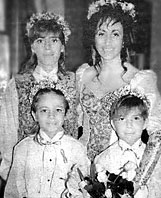
Ten minutes after issuing a marriage license that Pasha Rivers-McMahon had applied for alone, the clerk called to request it be returned. Pasha and her partner Penny Rivers-McMahon refused. After their wedding — pictured (to the right) with their sons Ian and Joel — the signed marriage certificate was received at South Burlington, Vermont, City Hall. However, the city’s attorney refused to allow it to be registered. Alaska - 1995 Landmark Suit
An Alaskan male couple, Jay Brause and Gene Dugan, sued for legal marriage in Brause v. Alaska. On, February 20, 1998, Superior Court Judge Peter Michalski threw out the state’s bid to dismiss the case and ruled that choosing a partner is a fundamental right. The ruling did not legalize same-sex unions in Alaska, but would have forced the state to prove a compelling reason why such unions should be illegal.
In November 1998, a ballot measure won which limits marriage as a union between one man and one woman, and prohibits any legal recognition of same-sex marriage. While such a law may or may not have affected the outcome of the case, the litigants decided to stop pursuing legal marriage and continue their fight for equal rights and benefits of marriage, but not as married persons. If the case is successful under their new direction, it will have no effect on marriage laws in Alaska or in any other state. Further, it could potentially install a second-class domestic partner status, as in Hawaii. |
| 1996 | |
|
Nebraska - 1996 Attempted Pro-Marriage Bill A bill in Nebraska was introduced to legalize same-sex marriage. Failed.
A male couple in Ithaca, New York got the sympathetic ear of the town’s mayor in requesting a legal marriage license. Phillip and Toshav Storrs were ultimately thwarted, however, by prohibitive state laws. They sued, in Storrs v. Holcomb, on April 1996 against the Ithaca city clerk for denying their application for a marriage license in December 1995. The trial court ruled against them and they appealed to an intermediate-level appellate court. That court ruled that they had failed to include a necessary party — the N.Y. State Dept. of Health — and dismissed the suit. In February 1998 they re-filed the case against the Ithaca city clerk and the N.Y. State Dept. of Health. A hearing was due on September 11, 1998, however, it appears that the suit was dropped. The Storrs may be found in Partners’ Committed Couples Gallery. |

| 1997 |
|
Maryland - 1997 Attempted Pro-Marriage Bill
Nebraska - 1997 Attempted Pro-Marriage Bill Nebraska bill also attempted in 1996. Oregon - 1997 Attempted Pro-Marriage Bill Washington - 1997 Attempted Pro-Marriage Bill Wisconsin - 1997 Attempted Pro-Marriage Bill These all failed. Hawaii - 1997 Domestic Partner Registration The “Reciprocal Beneficiary Relationship” law was enacted in Hawaii on July 8. It allowed two single adults — same-sex couples, blood relatives or anyone — to have between 50-60 spousal rights (such as health care decisions, ability to sue for wrongful death, insurance and state pensions, joint tenancy, and property inheritance without a will). One major item — workplace insurance for a partner — has been rendered invalid by the State Attorney General. Because Hawaii appeared to be loosing the court cases (begun in 1991) for recognition of legal marriage for same-sex couples, it was an effort by Hawaii legislators to circumvent providing full, legal marriage for same-sex couples. Ironically, the Christian Coalition’s chief lawyer, Jay Sekelow, campaigned vigorously in support of this bill — anything to stop legal marriage. The bill that offered Reciprocal Beneficiary status did not extend beyond 2001, and news reports stated that Hawaii’s legislature did not renew it, however, the state Web site seems to indicate that the status is still available. Vermont - 1997 Landmark Suit Three same-sex Vermont couples filed suit for the right to marry in Chittenden Superior Court, Burlington, Vermont, on July 22, 1997, in Baker v. State of Vermont. The couples, Stan Baker and Peter Harrigan, Nina Beck and Stacy Jolles, and Lois Farnham and Holly Puterbaugh, sued the State of Vermont as well as Shelburne, South Burlington and Milton, because the town clerks refused to issue marriage licenses to the couples.
After losing the first court hearing on December 19, 1997, the Vermont suit for legal marriage for same-sex couples got a mixed result in the final ruling on December 20, 1999. The court stated: “We hold that the State is constitutionally required to extend to same-sex couples the common benefits and protections that flow from marriage under Vermont law. Whether this ultimately takes the form of inclusion within the marriage laws themselves or a parallel ‘domestic partnership’ system or some equivalent statutory alternative, rests with the Legislature. Whatever system is chosen, however, must conform with the constitutional imperative to afford all Vermonters the common benefit, protection, and security of the law.”Based on the Vermont Constitution, the ruling establishes the necessity to treat all families alike — no matter what their make-up — but the ruling does not remedy the situation by immediately requiring the state to issue licenses. Instead it required the legislature to institute marriage or some kind of “domestic partnership” or “registered partnership law.” The court states that a partnership law would “generally establish an alternative legal status to marriage for same-sex couples, impose similar formal requirements and limitations, create a parallel licensing or registration scheme, and extend all or most of the same rights and obligations provided by the law to married partners.” The court did not consider that such a task is likely to be impossible. It was tried in Hawaii and miserably failed. Such a partnership law would need to duplicate more than 870 Vermont laws that are triggered by legal marriage. Further, a partnership law (as opposed to a marriage license) would not be recognized by any other state, nor by the Federal system (including such rights as immigration and social security benefits). Nor did the court consider the separate and unequal nature inherent in a domestic partner status. [For a review of unequal treatment by domestic partnership status, please see Marrying Apartheid.] Rather than offer legal marriage — the same procedure to protect families as is offered to opposite-sex couples — the Vermont legislature created a new law labeled “Civil Union.” By designing a totally separate form of marriage, which could rightly be called “marriage light,” they created an apartheid. As the U.S. Supreme Court ruled regarding segregation, there is no such thing as separate and equal. Civil Unions — effective July 1, 2000 except for provisions relating to insurance and taxes that become effective in 2001 — do not have any legal weight in the Federal sphere, and it is highly unlikely that any other state will honor the new, almost-but-not-quite-marital license.
The new status, however, does offer a vastly improved range of protections for same-sex couples never before available in the United States. Those couples who live in Vermont, once signed up as a civilly unionized couple, can say they are no longer “legal strangers” — they are finally “next-of-kin.”
On April 7, 2009, Vermont’s legislature overrode the governor’s veto and made Vermont the 5th state to offer full, legal marriage to same-sex couples. |
| 1998 |
|
Maryland - 1998 Attempted Pro-Marriage Bill Maryland also attempted a bill in 1997. Rhode Island - 1998 Attempted Pro-Marriage Bill |
| 1999 |
|
Rhode Island - 1999 Attempted Pro-Marriage Bill Rhode Island also attempted a bill in 1998. Massachusetts - 1999 Attempted Pro-Marriage Bill A Massachusetts bill would have repealed all marriage regulations except age limits. Also failed. |
| 2000 |
|
Maryland - 2000 Attempted Pro-Marriage Bill
Rhode Island - 2000 Attempted Pro-Marriage Bill Rhode Island’s third year on this bill. Vermont - 2000 Attempted Pro-Marriage Bill |
| 2001 | ||||||||||||||||||
|
Montana - 2001 Attempted Pro-Marriage Bill
New York - 2001 Attempted Pro-Marriage Bill Rhode Island - 2001 Attempted Pro-Marriage Bill Rhode Island’s fourth year on this bill. California - 2001 Attempted Pro-Civil Union Bill Hawaii - 2001 Attempted Pro-Civil Union Bill Nevada - 2001 Attempted Pro-Civil Union Bill Washington - 2001 Attempted Pro-Civil Union Bill Washington’s bill was introduced by Sen. Pat Thibaudeau (D-Seattle), and Rep. Ed Murray (D-Seattle). Massachusetts - 2001 Landmark Suit, Marriage Allowed
In Goodridge v. Dept. of Public Health, seven Massachusetts couples, who have been in committed relationships between five and 30 years, sued for legal marriage on April 11, 2001. Four of the couples have young children; others have faced health crises. All are concerned about providing the security for each other and their families that automatically comes with a marriage license.
The Massachusetts trial court ruled against the seven same-sex couples on May 2002, concluding that having and raising children is central to the purpose of marriage, despite acknowledging that four of the seven couples in the case have children, and that Massachusetts law allows same-sex couples to jointly adopt.
Litigant Gina Smith: On November 18, 2003, the Massachusetts Supreme Court ruled that same-sex couples are legally entitled to civil marriage under the Massachusetts Constitution. The 4-3 ruling did not order licenses to be issued to the couples who challenged the law. Instead, the court ordered the Legislature to change the civil marriage statutes within 180 days. This is the fourth U.S. state court to rule in favor of legal marriage for same-sex couples. Following these decisions Hawaii and Alaska altered their constitutions to prevent equal treatment of same-sex couples, and Vermont created a separate-but-not-equal domestic partner status called “Civil Unions.” The governor has insisted on applying a 1913 law — that has not been used in 27 years, and originally intended to prevent interracial marriage — to stop out-of-state same-sex couples from getting a marriage license. Two suits have been brought against the 1913 law and its selective enforcement against same-sex couples.
Massachusetts became the first American state to offer legal marriage on May 17, 2004. It is fully equal to opposite-sex marriage licenses, however, it remains to be seen if other states will honor it. The U.S. federal system will not.
Please see:
Massachusetts Offers Legal Marriage] Massachusetts Court Finding and GLAD for more details on this case. Georgia - 2001 Civil Union Not Recognized Susan Burns and Debra Jean Freer, asked a Georgia appeals court to recognize their Vermont civil union in April, 2001. Burns had been married to Darian Burns and were divorced. In 1998, Darian was granted custody of their three children. The court prohibited visitation for Susan when there were overnight stays, or cohabited with an adult other than a marriage partner, or a relative within the second degree. When Susan entered into a Vermont Civil Union with Debra, the husband filed a motion for contempt, saying she had violated the terms of their divorce by having her children visit her in the home she shares with her same-sex partner. The state trial court ruled in favor of the husband, declaring that Georgia is not required to recognize Civil Unions.
Finally, on January 23, 2002, the Georgia Court of Appeals declared civil unions to be invalid in Georgia. Two other cases attempting to use the Vermont domestic partner status of Civil Union likewise failed in Illinois (February 2001) and Connecticut (July 2002). | ||||||||||||||||||







| 2002 | |||||||||||||||||||||
|
New Jersey - 2002 Suit Seven New Jersey couples sued for the right to marry on June 26, 2002. The case, Lewis et. al. v. Harris et. al., is joined by Lambda Legal Defense and Education Fund and is based solely on the New Jersey Constitution. The state filed a motion to dismiss the case claiming that same-sex couples don’t have a constitutional right to marry because of the historic definition of marriage. On November 5, 2003, state Superior Court Judge Linda Feinberg, granted the dismissal. The couples appealed the ruling to the state appellate court. In April 2004, the suit was joined by the city of Asbury Park as a follow through to their having issued marriage licenses to 16 same-sex couples in March 2004. [Please see Civil Marriage Disobedience: Revolution Starts with a Kiss] Lambda filed the briefs in May 2004. On June 13, 2005, the appelate court decided, 2-1, to uphold the lower court’s 2003 ruling. The state had argued that the trend in this country is to limit marriage to one man and one woman. The state also said the law should only be changed by the Legislature. Appellate Judge Stephen Skillman wrote for the majority: “Absent legislative action, there is no basis for construing the New Jersey Constitution to compel the State to authorize marriages between members of the same sex.” In dissent, Appellate Judge Donald G. Collester said that if marriage is defined strictly as a heterosexual union, then couples are denied the right to marry the person of their choice, and so have no real right to marry. On October 25, 2006, the New Jersey Supreme Court ruled that that same-sex couples are constitutionally entitled to “the full rights and benefits enjoyed by heterosexual married couples.” The New Jersey court gave the state legislature 180 days to amend New Jersey’s laws to meet the court’s concerns. In the opinion authored by Justice Albin, all seven Justices of the New Jersey Court recognized that gay men and lesbians are “our neighbors, our co-workers, and our friends” and that there is no “legitimate public need for an unequal legal scheme of benefits and privileges that disadvantages committed same-sex couples.” Justice Albin wrote: “HELD: Denying committed same-sex couples the financial and social benefits and privileges given to their married heterosexual counterparts bears no substantial relationship to a legitimate governmental purpose. The Court holds that under the equal protection guarantee of Article I, Paragraph 1 of the New Jersey Constitution, committed same-sex couples must be afforded on equal terms the same rights and benefits enjoyed by opposite-sex couples under the civil marriage statutes. The name to be given to the statutory scheme that provides full rights and benefits to samesex couples, whether marriage or some other term, is a matter left to the democratic process.”However, a slim majority of the court stopped short of requiring New Jersey to issue marriage licenses to same-sex couples, instead turning to the legislature to figure out how to implement its decision, with either full legal marriage or a separate legal category for same-sex couples. Writing for the three dissenters, Chief Justice Poritz decried the possibility of such a separate legal status, such as a “civil union”: “We must not underestimate the power of language. Labels set people apart as surely as physical separation on a bus or in school facilities. Labels are used to perpetuate prejudice about differences that, in this case, are embedded in the law. By excluding same-sex couples from civil marriage, the State declares that it is legitimate to differentiate between their commitments and the commitments of heterosexual couples. Ultimately, the message is that what same-sex couples have is not as important or as significant as ‘real’ marriage, that such lesser relationships cannot have the name of marriage.”In December 2008, the legislature-appointed Civil Union Review Commission issued its report documenting how civil unions fall short of the court-mandated equality for same-sex couples.
When the legislature failed to provide legal marriage, Lambda Legal announced, on January 7, 2010, plans to go back to court to seek marriage equality after the New Jersey Senate failed to pass a marriage bill.
Indiana - 2002 Suit Three Indiana same-sex couples filed a suit for legal marriage on August 22, 2002. All three had obtained Vermont Civil Unions. Morrison, et al. v. O’Bannon (also reported as Morrison v. Sadler) was filed in Marion County Superior Court, demanded the right to marry in Indiana, or alternatively, full recognition of their Civil Unions. The complaint argues that restricting marriage to opposite-sex couples is an unconstitutional denial of equal protection. Also, state interference with the decision of who to marry trespasses on constitutional privacy rights. Further, the complaint asserts that the Indiana Constitution’s “full faith and credit” requirement demands recognition of the Vermont Civil Unions status. The was filed by the Indiana Civil Liberties Union. As in many other U.S. states, the suit faced state law prohibiting legal marriage for same-sex couples, as well as law forbidding recognition of legal marriage or equivalent contracts from out-of-state.
On May 7, 2003, judge S.K. Reid dismissed the case.
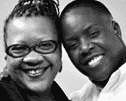
Says Teresa, “We just want to be treated like any other couple. We expect to spend the rest of our lives together.” | |||||||||||||||||||||






| 2003 |
|
Montana - 2003 Attempted Pro-Marriage Bill
A bill to legalize same-sex marriages was launched in Montana by Rep. Tom Facey (D-Missoula). He had presented a similar bill in 2001.
Washington - 2003 Attempted Pro-Civil Union Bill A bill based on a Vermont-style Civil Union was filed on February 2, 2003, in Washington State. Representative Ed Murray (D-Seattle) introduced House Bill 1939, which was referred to the House’s Juvenile Justice and Family Law Committee. The bill had a reading on February 17, 2003, however, no hearing was scheduled. The bill was joined by Joe McDermott (D), Dave Upthegrove (D-Des Moines), Jim Moeller (D-Vancouver), had 13 house co-sponsors altogether. The Senate introduced its own version with seven senate sponsors, but the bill, SB 6014, was introduced too late in the year for any further action. Nebraska - 2003 Anti-Ban Suit Citizens for Equal Protection v. Attorney General was filed on May 1, 2003, by the ACLU of Nebraska and Lambda Legal in United States District Court for the District of Nebraska. The suit argued that the Nebraska Marriage Amendment IM 416 unconstitutionally denied gay and lesbian persons equal access to the political system. The amendment, adopted on November 7, 2000, states: “Only marriage between a man and a woman shall be valid or recognized in Nebraska. The uniting of two persons of the same sex in a civil union, domestic partnership, or other similar same-sex relationship shall not be valid or recognized in Nebraska.” On November 10, 2003, U.S. district judge Joseph F. Bataillon ruled that a motion to stop the suit was without merit, and the case could proceed. Arizona - 2003 Suit Harold Donald Standhardt, 34, and Tod Alan Keltner, 36, sued the state of Arizona and the Maricopa County Superior Court clerk on July 7, 2003, following the rejection of their application for a marriage license. Harold Donald Standhardt and Tod Alan Keltner v. State of Arizona is based on the June 26, 2003, U.S. Supreme Court ruling that struck down the Texas law that made homosexual sex a crime. The lawsuit asked that Arizona’s law banning same-sex marriages be ruled unconstitutional and overturned. Standhardt and Keltner, have been a couple since 1997. They live together and want to adopt children. They are interested in the legal rights a marriage license provides such as being able to file joint tax returns, and the right to be in a hospital room in case of an emergency. On October 8, 2003 the State Appellate Court upheld the constitutionality of Arizona’s ban on same-sex marriages. The three-judge panel returned a 34-page unanimous decision, rejecting every element of the petitioners’ case. Judge Ann A. Scott Timmer wrote in the ruling, “Although many traditional views of homosexuality have been recast over time in our state and nation, the choice to marry a same-sex partner has not taken sufficient root to achieve constitutional protection as a fundamental right.” She also wrote, “This court does not dispute that a homosexual person’s choice of life partner is an intimate and important decision. However, not all important decisions sounding in personal autonomy are protected fundamental rights.” The couple had argued that marriage is a fundamental right and that prohibiting it for same-sex couples violates constitutional protections for due process of law under both the federal and state constitutions and privacy under the Arizona Constitution. Standhardt and Keltner asked the high court to review the case December 2003. But the justices rejected the request during their May 25 conference. The court did not comment on the decision, which leaves the Appellate ruling in force. On May 25, 2004, the Arizona Supreme Court declined to review the case. |
| 2004 | ||||||||||||||||||||||||||||||||||||||||||||||||||||||||||||||||||||||||||||||||||||
|
California - 2004 Attempted Pro-Marriage Bill • A bill (AB1967) for legal marriage for same-sex couples was introduced on January 12, 2004, by state Assembly Member Mark Leno (D-San Francisco). Leno stated, “The time has come for California to honor its commitment to equality for all Californians. My bill will affirm the civil rights of gay, lesbian, bisexual, and transgender adults who wish to take on the responsibility of marriage and ensure that children being raised by these couples receive the same protections as children raised by married couples. For too long, the right to marry has been denied to thousands of Californians based on their gender and sexual orientation, resulting in harm to them and their children.” Leno also stated: “This is a civil rights bill, pure and simple. There are no constitutional and legal grounds on which to deny the issuance of marriage licenses to loving, same-sex couples.” On April 20, 2004, an Assembly committee approved the bill 8-3. Leno said: “I saw in the eight “aye” votes a great pride in the fact that people were standing up for civil rights — not special privileges — but civil rights.” The bill was to go to the appropriations committee where it was to be put in a suspension file while its cost to the general fund is determined. It was considered unlikely to pass in the full Legislature, so he withdrew the bill. • On December 7, 2004 Assembly member Mark Leno (D-San Francisco) re-introduced legislation (AB19) this year to legalize same-sex marriage. He called it the “Religious Freedom and California Civil Marriage Protection Act” The bill, co-authored by Assembly Speaker Fabian Nuñez (D-Los Angeles), passed the Assembly Judiciary Committee on April 26, 2005, by a 6-3 vote, and by the Assembly Appropriations Committee, on May 25, by a 13-5 vote. Stated Leno: “Why play defense? It makes more sense to speak about this plainly as a civil rights issue. Equal protection is guaranteed under the constitution.” His bill has been supported by various clergy, including Baptist, United Church of Christ, Metropolitan Community and Unitarian congregations which have stated that the bill is consistent with Christian teachings because it promotes equality for gay men and lesbians. On June 2, 2005, the California Assembly defeated the bill, with 37 legislators opposed to the measure, and 35 in favor. Rhode Island - 2004 Attempted Pro-Marriage Bill Sen. Rhoda Perry (D-Providence) and Rep. Arthur Handy (D-Cranston) presented pro-marriage bills. The Perry bill co-sponsors included four senators. The Handy bill had 11 House co-sponsors. Both the House and Senate judiciary committees held hearings on the marriage bills. Neither took any action. Massachusetts - 2004 Attempted Pro-Civil Union Bill Proposals of Civil Union types of status were presented as part of anti-gay, anti-marriage state constitution amendment bills. May 2004 saw the right wing frequently running to the court and legislative houses in vain attempts to stop legal marriage for same-sex couples. [Please see: Massachusetts Offers Legal Marriage] California - 2004 Suit • Carmen, 52, and Dorothy Apodoca of Garden Grove, sued Orange County seeking $25 million in damages for violating their civil rights and inflicting emotional distress after the county clerk’s office denied their marriage license application January 7, 2004. The couple has been together since 1996. Dorothy co-adopted Carmen’s daughters, 13 and 14. • On February 3, 2002, Robin Tyler and Diane Olson, and Rev. Troy Perry and Phillip Ray DeBlieck, sued the state of California in Tyler vs. the State of California. Perry and DeBlieck were asking the state to recognize their Canadian legal marriage.
This case was later consolidated with 5 other cases and won in 2008.
• San Francisco mayor Gavin Newsom, on February 12, 2004, ordered the issuance of marriage licenses to same-sex couples. It was purely an act of civil disobedience as same-sex marriage is not allowed anywhere in the U.S. • On February 19, 2004, San Francisco sued the state of California — City and County of San Francisco v. State of California — challenging the state’s ban on same-sex marriage as unconstitutional. City officials say the ban violates the equal protection and due-process clause of California’s constitution.
This case was later consolidated with 5 other cases and won in 2008. • On March 12, 2004, the National Center for Lesbian Rights, Lambda Legal, and the ACLUs of Northern and Southern California, filed a lawsuit — Woo and Chung v. Lockyer — seeking the right to marry for same-sex couples in California on behalf of six same-sex couples, Our Family Coalition, and Equality California. Five of the six couples had appointments to obtain marriage licenses at San Francisco City Hall, but their appointments were cancelled as a result of the California Supreme Court’s order directing San Francisco to stop issuing marriage licenses to same-sex couples. The lawsuit lists California Attorney General Bill Lockyer and State Registrar Michael Rodrian as defendants. It asks the state to require all marriage licenses use gender-neutral language and to make them available to same-sex couples. The lawsuit argues that denying same-sex couples the right to marry violates the California Constitution’s guarantees of equality, liberty, and privacy.
This case was later consolidated with 5 other cases and won in 2008.
On April 15, 2005, San Francisco Superior Court Judge, Richard Kramer, issued his final written judgment in the California marriage equality case: “It appears that no rational purpose exists for limiting marriage in this state to opposite-sex partners.”This ruling clearly states that gay and lesbian couples in California can marry, and that state laws against it are unconstitutional. However, the California Court of Appeals ruled against the Superior Court on October 5, 2006. By a 2–1 decision, it ruled on six consolidated cases that gay and lesbian people don’t have the same fundamental legal rights as everyone else, that discrimination against them doesn’t need to be viewed with strict legal scrutiny. Justices William R. McGuiness and Joanne C. Parrilli offered the unbelievable notion that the court would be “usurping” the role of the legislature by finding that it is unconstitutional to outlaw same-sex marriage. Curiously, when the state legislature took up this issue and passed a bill, the governor vetoed it stating that he was leaving the issue to the courts. The desenting voice, Justice J. Anthony Kline, stated: “To say that that the inalienable right to marry the person of one’s choice is not a fundamental constitutional right, and therefore may be restricted by the state without a showing of compelling need, is as terrible a backward step as was the unfortunate and now overruled opinion in Bowers, supra, 478 U.S. 186. Ignoring the qualities attached to marriage by the Supreme Court, and defining it instead by who it excludes, demeans the institution of marriage and diminishes the humanity of the gay men and lesbians who wish to marry a loved one of their choice.”• On May 15, 2008, the California Supreme Court ruled (4-3) that it is unconstitutional to exclude same-sex couples from legal marriage, even if such couples are granted the right to enter into Domestic Partnerships or Civil Unions, which provide most, or even all, of the same rights as legal marriage. • On November 6, 2008, Proposition 8 was narrowly won, which gutted the right of same-sex couples to marry by amending the state constitution. Three suits were quickly launched to stop the evisceration of civil rights. One of the suits — Strauss v. Horton — was launched by the American Civil Liberties Union, Lambda Legal, and the National Center for Lesbian Rights. It urges the California Supreme Court to invalidate Proposition 8 because the initiative process was improperly used in an attempt to undo the constitution’s core commitment to equality for everyone by eliminating a fundamental right from just one group — lesbian and gay Californians. Proposition 8 also improperly attempts to prevent the courts from exercising their essential constitutional role of protecting the equal protection rights of minorities. It was reported that the California Attorney General said the state will continue to honor the marriages of the 18,000 lesbian and gay couples who have already married in California. • On May 26, 2009, the California Supreme Court posted its ruling that the proposition was constitutional and that one segment of citizens could deny equal rights to another group of citizens. The 18,000 California same-sex couples who married before Prop 8 remain married. Florida - 2004 Suit On February 25, 2004, more than 170 gay men and lesbians sued Broward Court clerk Howard Forman, challenging the Florida law prohibiting them from obtaining marriage licenses. Broward Circuit Judge Richard Eade rejected a bid by the Orlando-based Liberty Counsel to enter the case in support of the ban. Eade ruled that if it was allowed to participate, it would open the floodgates for dozens of other groups. The Counsel is a radical right Christian law firm that has launched suits across the country to block same-sex marriage and gay rights issues. The litigants are represented by lawyer Ellis Rubin who once led the fight against a Miami-Dade County ordinance guaranteeing equal rights for gay men and lesbians. He says he is now championing same-sex marriage as a form of penance. Washington - 2004 Suit • In Andersen v. King County, six same-sex couples sued King County for the right to marry after they were denied marriage licenses. The suit was filed on March 8, 2004, by the Northwest Women’s Law Center and Lambda Legal Defense and Education Fund. The claim centers on Washington’s “Defense of Marriage Act” of 1998, which forbids issuance of marriage licenses to same-sex couples, and violates the following sections of the Washington State Constitution:
• Castle v. State of Washington was filed on April 1, 2004. In this second suit, eleven couples wish to wed in Washington, or have their marriages recognized under Washington law. Besides baring marriage based on sex and sexual orientation, the State also refuses to recognize legal marriages performed in other jurisdictions on the same basis.
The suit, filed by the ACLU, states: “This arbitrary and prejudicial prohibition deprives same-sex Plaintiffs of the full array of rights, benefits, and privileges available to other Washington married couples. Accordingly, Plaintiffs respectfully request this Court to nullify the State’s discriminatory marriage restrictions and enforce the constitutional protections of liberty, equality, privacy, autonomy and human dignity guaranteed to all Washington residents.”
On July 26, 2006, a 5-4 ruling was issued against the Anderson v. King County and Castle v. State of Washington cases, which had been combined. The court’s split was reflected in a sharply divided finding, which ultimately upheld Washington’s 1998 anti-gay, anti-marriage “Defense of Marriage Act” that defines marriage soley as a union between a man and a woman. While Justice Barbara Madsen wrote that the state’s marriage law was enacted to “promote procreation and to encourage stable families,” and that “The legislature was entitled to believe that limiting marriage to opposite-sex couples furthers the State’s legitimate interests in procreation and the well-being of children,” the majority ignored the fact that many of the couples suing for equal treatment had children. Apparently, their families, which contained childen, did not count. The ruling did note a hardship for same-sex couples, and suggested that the legislature “may want to re-examine the impact of the marriage laws on all citizens of this state.” The finding contained six opinions, including dissents from Justices Mary Fairhurst, Bobbe Bridge and Tom Chambers. Justice Fairhurst said the plurality and concurring options “condone blatant discrimination against Washington’s gay and lesbian citizens in the name of encouraging procreation, marriage for individuals in relationships that result in children, and the raising of children in homes headed by opposite-sex parents, while ignoring the fact that denying same-sex couples the right to marry has no prospect of furthering any of those interests.” [Please see our articles:
Washington State - Bridge’s Dissenting Opinion: Andersen v. King County] Washington State - Fairhurst’s Dissenting Opinion: Andersen v. King County] New York - 2004 Suit • On March 5, 2004, Lambda Legal filed suit against the state of New York. Hernandez and Cohen v. Robles seeks the right to marry on behalf of five-year partners Daniel Hernandez and Nevin Cohen. The suit names the city clerk of New York City, Victor Robles, as the defendant. The suit argues that the denial of a marriage license to this same-sex couple violates their due process rights under the state constitution, including their right to privacy and right to marry. Second, the opposite-sex restrictions on marriage are a denial of equal protection, based on gender and on sexual orientation. Reacting to the New Paltz marriages [Please see our article: Civil Marriage Disobedience], New York Attorney General Eliot Spitzer issued an advisory opinion on March 3, 2004, raising “constitutional concerns” with the state’s marriage law, and suggesting that these concerns should be resolved by the courts. Spitzer wrote that while same-sex marriage remains technically illegal under New York’s Domestic Relations Law, he questioned whether the statutory language would survive a constitutional review by the state’s high court.
Spitzer: Spitzer also concluded that the state’s legal precedents “presumptively require” that same-sex couples legally married elsewhere — specifically in Massachusetts and Canada — “must be treated as spouses for the purposes of New York law.” In February 2005, Justice Doris Ling-Cohan ruled that the state’s domestic relations law is unconstitutional since it does not permit marriage between people of the same sex. Ling-Cohan held that the words “husband,” “wife,” “groom” and “bride,” as they appear in the domestic relations law, or DRL, should be defined to apply equally to men and women. Ling-Cohan also permanently barred the New York city clerk from denying a marriage license to any couple solely on the ground that the two were of the same sex. Her decision, favoring equal marriage rights, was the first of its kind in New York City. On December 8, 2005, a state appeals court reversed (4-1) the Ling-Cohan ruling that would have permitted same-sex couples to get married in New York City, stating that it is not the role of judges to redefine the terms “husband” and “wife.” The appeals court also criticized the way Ling-Cohan proceeded, saying, “we find it even more troubling that the court, upon determining the statute to be unconstitutional, proceeded to rewrite it and purportedly create a new constitutional right.” The court said this “was an act that exceeded the court’s constitutional mandate and usurped that of the legislature.” The appeals court judges also claimed that state laws regarding marriage “do not violate the due process and equal protection provisions of the New York State Constitution.” The judges’ 4-1 reversal keeps the status quo on same-sex marriage. The judges noted that nothing in the DRL specifically bars same-sex marriage, however, its gender-specific terms have been interpreted to indicate the legislature never intended to allow same-sex marriage. The panel’s dissenter, Justice David Saxe, said he saw no important public interest in barring same-sex marriage, and said laws that prohibit it perpetuate legal discrimination.
Lawyers for this case say they have always expected the case would eventually be tried in the New York Supreme Court, and will appeal. On October 21, 2004, acting state Supreme Court Justice Alfred Weiner ruled that the state’s domestic relations law limited marriage licenses to opposite-sex couples. Countering the couples’ claim that the law did not specifically ban same-sex couples, the judge said the legislature’s use of phrases such as “husband and wife” and “bride and groom” made its intentions clear.
The couples also claimed the denial of marriage licenses was unconstitutional discrimination on the basis of sexual orientation, which was also dismissed. The plaintiffs’ lawyer, Norman Siegel, said he would appeal the ruling.
• On April 7, 2004, the American Civil Liberties Union filed a lawsuit — Samuels and Gallagher v. New York State Department of Health — asking the courts to declare unconstitutional a state law that denies same-sex couples the right to marry. They, and the New York Civil Liberties Union (NYCLU) and the law firm Paul Weiss Rifkind Wharton & Garrison, charge that the law violates the equal protection, privacy and due process provisions of the New York Constitution.
The suit was filed on behalf of 13 same-sex couples. Many of them had hoped to be married by New Paltz Mayor Jason West. The suit targets the state Department of Health, which regulates marriage everywhere in the state except New York City, where marriage licenses are issued by the city clerk’s office.
A trial court judge in Albany, N.Y. on December 7, 2004, said that the state constitution allows New York to continue to exclude same-sex couples from marriage. An appeal to a higher court will be launched. I will decide the critical question of whether all people have a fundamental right to marry, or whether the government is justified in excluding same-sex couples from marriage.
• On June 3, 2004, twenty-five same-sex couples sued for the right to marry. This case — Seymour, et. al. v. Julie Holcomb; City of Ithaca; and New York State Department of Health [Holcomb is the City Clerk.] — had the support of the city of Ithaca. The previous March, Ithaca Mayor Carolyn Peterson announced that the city would accept applications for marriage licenses from same-sex couples. When passed on to the state, the licenses were not approved. Mayor Peterson said the city would join in any court battle on behalf of same-sex couples, although legally, the suit must also name the city as a defendant. The couple’s lawyers said on June 2, 2004, that they plan to argue that the Department of Health and the city are denying gay couples equal protection under the law. Attorney Richard Stumbar: “By refusing to issue marriage licenses to these plaintiffs, the City and State have unconstitutionally interfered with the plaintiffs’ privacy rights, and have denied them equal protection of the laws by making impermissible distinctions based on gender and sexual orientation.”The second lawyer in the case, Mariette Geldenhuys, said that the couples have been excluded from a broad array of statutory protections and benefits afforded by New York’s marriage law, as well as denied benefits and protections offered by employers and other private entities which rely on the State’s definition of marriage.
On February 23, 2005, Supreme Court Justice Robert C. Mulvey in Elmira ruled against the suit. On October 17, 2005, and the case was appealed and heard by the Appellate Court in Albany. • On July 6, 2006, the highest court in New York State, the Court of Appeals, ruled that the state “Constitution does not compel the recognition of marriages between members of the same sex.” In its ruling, the court said that “Whether such marriages should be recognized is a question to be addressed by the Legislature.” The court heard arguments in May 2006 in the omnibus case — known as Hernandez v. Robles — were brought by 44 same-sex couples, from four different lawsuits: Hernandez v. RoblesIn the lower courts, judges in three of the cases upheld the current ban on same-sex marriage. In the fourth, New York City judge Doris Ling-Cohan ruled that the New York State Constitution guarantees basic freedoms to lesbian and gay people, and that those rights are violated when same-sex couples are not allowed to marry. That ruling was overturned in a mid-level appeals court. The high court ruling said that the Domestic Relations Law, which governs marriage, does not specifically say that only people of different sexes may marry each other, but “that was the universal understanding when Articles 2 and 3 were adopted in 1909, an understanding reflected in several statutes.” The court also said that there are “at least two grounds that rationally support the limitation on marriage that the Legislature has enacted.” The ruling said that these involved children: “First, the Legislature could rationally decide that, for the welfare of children, it is more important to promote stability, and to avoid instability, in opposite-sex than in same-sex relationships.The ruling also noted that the Legislature could “rationally believe that it is better, other things being equal, for children to grow up with both a mother and a father.” This court’s reasoning disregards the large number of children that are in the care of gay men, lesbians, and same-sex couples. Denying marriage to these couples prevents their children from accessing legal protections, as well as for providing an orderly process regarding such issues as medical care taking and custody. The court could be interpreted as further suggesting that the Legislature could “rationally believe” that they should deny single parents access to adoption, foster caring, or the right to their own children. The justices said in the ruling that the same-sex couples fighting for marriage equality “have not persuaded us that this long accepted restriction is a wholly irrational one, based solely on ignorance and prejudice against homosexuals … If we were convinced that the restriction plaintiffs attack were founded on nothing but prejudice — if we agreed with the plaintiffs that it is comparable to the restriction in Loving v. Virginia a prohibition on interracial marriage that was plainly ‘designed to maintain White Supremacy’ — we would hold it invalid, no matter how long its history.”
A poll released in April showed that a majority of people across New York State support same-sex marriage. In light of the New York State Court of Appeals decision, the New York State Bar Association called on the State Legislature to take comprehensive action to eliminate the inequities faced by same-sex couples: “We have urged the Legislature to provide one of the following remedies to same-sex couples: civil unions; domestic partnerships; or marriage. While we are not advocating which of these approaches should be adopted, we call upon the Legislature to enact one of them, so that same-sex couples will no longer face the legal inequities they now encounter.”Here is the dissenting opinion for Hernandez v. Robles, which makes clear the issues and the justice of allowing legal marriage for same-sex couples: NY Dissenting Opinion On July 12, 2006, a court on Long Island denied health benefits to the partner of a Uniondale man, as a direct affect of the Hernandez ruling. In his ruling, State Supreme Court Justice Edward W. McCarthy said that even though they had wed two years ago in Canada, the men’s civil marriage was not recognized by the state of New York. In a three-page order in the Long Island case, the Justice denied a motion by the plaintiff, Duke L. Funderburke, who was trying to obtain spousal health benefits from the Uniondale Union Free School District for Bradley Davis, his partner of 43 years. Mr. Funderburke, now 73, and Mr. Davis, 68, were married in Ontario in 2004. North Carolina - 2004 Suit Richard Mullinax, 36, and Perry Pike, 41, of Old North Durham, filed suit against Durham County on March 22, 2004. The lawsuit contends that the county must issue the marriage license, even though state law forbids same-sex marriage, and it would only have symbolic meaning. County Attorney Chuck Kitchen filed a motion to dismiss the suit, contending that the case belongs in Superior, not District, Court. The case was heard and dismissed on May 10, 2004 by District Court Judge Brown who agreed that the case belonged in Superior Court, and dismissed it without prejudice. The order was signed by the judge on May 17. Richard and Perry shortly issued a press release stating that they were not going to file in Superior Court. New Jersey - 2004 Suit Ashbury Park file a lawsuit seeking a ruling that would allow the city to continue granting marriage licenses. It had issued 16 licenses, and officiated at one of them, before the state attorney general, Peter C. Harvey, ordered city officials to stop. The suit was filed at the end on March 2004, and then soon dropped in order to join the ongoing New Jersey suit for legal marriage that was launched in 2002. [Please see: Civil Marriage Disobedience] Oregon - 2004 Suit
On March 3, 2004, Multnomah County allowed same-sex couples to obtain a marriage license. By March 23, 2004, more than 2,400 same-sex couples from around the nation were married in Portland. As of April 20, 2004, marriage licenses were approved. The state has refused to register the marriages. Li v. Oregon was filed — on March 24, 2004 in Multnomah County by the American Civil Liberties Union, along with Basic Rights Oregon, Multnomah County and Benton County. The suit includes a constitutional challenge involving same-sex couples in Lane and Benton counties who have not been able to marry, and on behalf of nine same-sex couples who have married with Multnomah County licenses, but whose marriages were likewise not recognized by the state. 14 Republican legislators attempted a “motion to intervene” and were rejected by Judge Frank Bearden on March 26, 2004, because he said it would slow down proceedings. The Republican representatives include: Cliff Zauner (Woodburn), Tom Butler (Ontario), Betsy Close (Albany), Gordon Anderson (Grants Pass), Linda Flores (Clackamas), Bill Garrard (Klamath Falls), Wayne Krieger (Gold Beach), Tim Knopp (Bend), Randy Miller (West Linn), Tootie Smith (Mollala), Phil Yount (Tigard), and Mary Gallegos (Cornelius). Also included were Republican Senators Charles Starr (Hillsboro), and Gary George (Newberg), as well as former Republican state Rep. Jeff Kruse of Roseburg, who is running for the state Senate. On May 27, 2004, Oregon Attorney General Hardy Myers appealed the April ruling that ordered the state to recognize the 3,022 marriage licenses issued to same-sex couples. It seeks to also overturn the ruling that gave the state 90 days to provide same-sex couples with either marriage or the legal equivalent. In his ruling, judge Frank Bearden also ordered the county to stop issuing more marriage licenses to same-sex couples until the courts and the legislature made a final decision on same-sex marriage. Bearden’s ruling said that if the legislature failed to act he would allow the licensing to resume. By June 2, 2004, the Oregon Court of Appeals issued a temporary stay on registering the same-sex marriages.
After the November 2, 2004 citizen vote for the state constitutional amendment barring legal marriage to same-sex couples, the ACLU-Oregon announced they would be suing only for domestic partner benefits, a betrayal of the original intention of the suit.
On April 14, 2005, the Oregon Supreme Court nullified the 3,022 same-sex, legal marriages performed in Multnomah County. On November 4, 2005, Marion County Circuit Judge Joseph Guimond ruled against the arguments that the November 2004 state constitutional amendment, Measure 36, contained too many parts that should have been voted on as separate amendments, and that it was improperly submitted to voters. In part, the amendment duplicated existing state law forbidding marriage to same-sex partners. Massachusetts - 2004 Anti Out-of-State Suits • On June 18, 2004, Douglas Johnstone et al v. Thomas Reilly et al was filed challenging the constitutionality and discriminatory enforcement by the governor’s activation of an heretofore unused 1913 law. The governor’s purpose was to prohibit clerks from issuing licenses to out-of-state same-sex couples. The suit was brought by the American Civil Liberties Union of Massachusetts, along with the law firm of Palmer and Dodge, and represents the clerks from 13 cities and towns. It argues that state officials cannot be directed to apply a law in a discriminatory fashion. The selective enforcement of a law by state officials is as much an equal protection violation as is targeting black drivers for traffic tickets.
The suit seek declaratory and injunctive relief from the cease and desist order issued by the attorney general on May 21, and charge that the old law is unconstitutional as applied to same-sex couples — precisely because it is being used exclusively against same-sex couples. This suit also seeks declaratory and injunctive relief from the cease and desist order issued by the attorney general on May 21, and charge that the old law is unconstitutional as applied to same-sex couples — precisely because it is being used exclusively against same-sex couples. On August 18, 2004, a state judge declined to halt enforcement of the 1913 state law barring out-of-state couples from marrying in Massachusetts. An attorney for the couples said they would appeal. On March 30, 2006, the Massachusetts Supreme Court ruled that the 1913 state law can be used to block out-of-state same-sex couples from marrying if they are from nearby Connecticut, Maine, New Hampshire, and Vermont, because same-sex marriage is prohibited in those states. On September 29, 2006, Massachusetts Superior Court Judge Thomas Connolly ruled that same-sex couples who reside in Rhode Island can marry in Massachusetts. The ruling only applies to Massachusetts allowing one other state’s citizens to apply for a marriage license. It does not require Rhode Island to honor that license.
On November 9, 2006, Massachusetts legislators recess a constitutional convention until January 2, 2007, without voting on a citizen-proposed ballot measure to ban same-sex legal marriages. The move made it unlikely the measure would be acted on in time to get on the November 2008 ballot.
Florida - 2004 Suit
• Equality Florida and six same-sex couples sued Florida for legal marriage on April 15, 2004. The National Center for Lesbian Rights is assisting in the case. Ash v. Forman asks the state court in Key West to declare Florida’s current law, which bans marriage for gay and lesbian couples, unconstitutional. It says the state’s so-called “Defense of Marriage Act” (DoMA) violates the Florida constitution equal protection, due process, and privacy clauses. DoMA not only defined marriage as a union between one man and one woman, and also forbids the state from recognizing Civil Unions.
• Cindy Koenig and Margaret Kelley sued Lee County Court Clerk Charlie Green in August 2004, asking if Florida’s constitutional ban on same-sex marriage was legal. Koenig or Kelly? v. Green? In a move designed to intimidate anyone suing for legal marriage, the radical right-wing legal group Liberty Counsel led a counter suit against the couple. Filed in November 2004, it was joined by a Holmes County Clerk of Courts Cody Taylor, the Keys Chapel Orthodox Presbyterian Church, Orange County notary public Teresa Knox, and Hialeah-based Debonair Mechanical Inc. partners Charles and Susan Aleshire and Hector Anduiza. The counter suit was dropped in the first week of January 2005, after their similar suit in Monroe County was dismissed. This same group filed six similar suits throughout the state in the fall of 2004, challenging the suits that same-sex couples had filed seeking legal marriage. The Counsel claims they will make their case in a brief supporting continuing the marriage ban. Maryland - 2004 Suit Deane and Polyak v. Conaway was filed, on July 7, 2004, by the American Civil Liberties Union and Equality Maryland against the county clerk offices in Baltimore, and in four other Maryland counties. The suit charges that the clerks are in clear violation of the state constitutional guarantees of equality by denying same-sex couples the right to marry, and asks the courts to stop the clerks from refusing marriage licenses. The suit was brought on behalf of nine same-sex couples, and one man who recently lost his partner, who would like the right to marry. The clerks received a memo from Maryland attorney general, Joseph Curran (D), in February reminding them that they were not authorized to issue marriage licenses to same-sex couples. The memo said that the state does not recognize the marriages of same-sex couples who get marriage licenses in other states. In response to this suit, the attorney general said he would defend Maryland’s current law. But told the Washington Post he also thought it was “appropriate that the issue, which has been framed as a matter of civil rights, be decided by the courts.” Patrick Wojahn, an Equality Maryland board member who, with partner Dave Kolesar, is one of the plaintiffs in the case: “Without a marriage license, there is no absolute peace of mind for my partner and myself. We have natural fears about being left out in the cold should Dave fall ill again. I know that there are thousands of Maryland couples just like us who seek legal marriage to make caring for our families far less complicated and uncertain than it is now, as virtual strangers under the law.”
Connecticut - 2004 Suit On October 10, 2008, Connecticut became the third U.S. state to offer legal marriage to same-sex couples. Kerrigan and Mock v. Connecticut Department of Public Health was filed on August 25, 2004. Seven same-sex couples were denied marriage licenses in Madison, Connecticut. They sued the Department of Public Health, which supervises the registration of all marriages, and Dorothy Bean, the acting town registrar of vital statistics in Madison. The lawsuit asks the court to declare unconstitutional any law denying marriage rights to same sex couples, and to order public officials to issue marriage licenses to the couples in this case. New England’s Gay & Lesbian Advocates & Defenders (GLAD) represents the plaintiffs in cooperation with Maureen Murphy of Murphy, Murphy, Nugent in New Haven, Kenneth J. Bartschi of Horton, Shields & Knox in Hartford, and the Connecticut Civil Liberties Union..
Mary Bonauto, GLAD’s civil rights director: “This case presents an historic opportunity for Connecticut. Marriage is both a profound personal commitment and unique legal relationship that provides enormous protections to families. As a simple matter of equality, it is time for Connecticut to end this discrimination against same-sex couples and their families.”
Oklahoma - 2004 Suit On November 3, 2004, a lawsuit was filed in the U.S. District Court in Tulsa. It challenges the new Oklahoma constitutional amendment banning same-sex marriage. The lawsuit claims the litigants have been denied the rights and privileges of other citizens within the state of Oklahoma, as well as of the United States of America. This may be the first federal-level suit for marriage. Besides defining marriage as a union between a man and a woman — a redundancy of state law — the amendment also prohibits giving the benefits of marriage to unmarried couples in Oklahoma. In addition to seeking to overturn the amendment, the case challenges the constitutionality of the federal Defense of Marriage Act, which permits states to ignore same-sex marriage legalized in other states.
Defendants in the lawsuit include: Attorney General Drew Edmondson, Gov. Brad Henry, U.S. Attorney General John Ashcroft and President George W. Bush.
On July 20, 2006, U.S. District Judge Terence Kern ruled on in Bishop v. State of Oklahoma (2006 WL 2045877), that two Oklahoma same-sex couples can litigate various challenges to the federal Defense of Marriage Act and Oklahoma’s anti-gay, anti-marriage constitutional amendment, however, he sharply reduced the scope of the case by eliminating certain legal theories from consideration, and finding that the couples lacked standing to raise certain legal questions. The Federal “Defense of Marriage Act” (DOMA) has two operative parts: a provision excusing states from recognizing same-sex marriages performed in other states, and a section establishing an opposite-sex definition of marriage for all purposes of federal law. The Oklahoma Amendment restricts marriages in that state to opposite-sex couples, denies any of the “incidents” of legal marriage to unmarried couples, and says that same-sex marriages performed in other states will not be recognized in Oklahoma. In order to have “standing” to bring a lawsuit in federal court, an individual or group must have a personal stake in a live legal controversy, because the federal courts are limited by the Constitution to deciding “actual cases or controversies” and may not issue advisory opinions, or declare laws unconstitutional in the abstract. Additionaly, the plaintiffs have to allege a potentially valid legal theory for their case to survive the defendants’ motion to dismiss. The two couples have different characteristics relevant to the standing question. Mary Bishop and Sharon Baldwin had a church commitment ceremony in Oklahoma in 2002, and desire to have a civil marriage. Susan Barton and Gay Phillips, also Oklahoma residents, had a Vermont Civil Union in August 2001. They also were legally married in Vancouver, British Columbia in May 2005. They want the United States government, as well as the state of Oklahoma, to recognize both their Civil Union and their legal marriage as valid. Judge Kern applied very precise readings. As to DOMA, he relied on the recent decision by the U.S. Court of Appeals for the 9th Circuit in the Smelt case from Orange County, California. That court had ruled that a California same-sex couple, who were Califrnia domestic partners, did not have standing to challenge either aspect of DOMA, because they were not married and DOMA deals only with marriage recognition by states and the federal government. Kern concluded that Bishop-Baldwin lacked standing to challenge either aspect of DOMA, because they cannot claim to be married, or have any legal relationship to each other. But Barton-Phillips presented a more analytically difficult problem, because they are legally married and have the legal status of a Vermont Civil Union. Kern concluded that the Vermont legislature made clear that it did not consider a Civil Union to be a marriage, and, since DOMA was concerned with marriages, the Barton-Phillips civil union did not give them standing to challenge the state recognition portion of DOMA. Furthermore, Kern concluded that when DOMA law used the word “state,” it was referring to U.S. states, and was not using the word in its broader sense, referring to nations. Therefore, he found that DOMA does not apply to the question whether a U.S. state will recognize a same-sex marriage contracted in Canada (or in any other foreign country that allows such marriages). That question may be determined by reference to principles of international law, or to the legal customs embodied in the concept of “comity,” under which courts exercise discretion based on their view of state public policy. Consequently, neither plaintiff couple had standing to challenge the part of DOMA that excuses states from recognizing same-sex marriage performed in other states. Regarding whether either couple had standing to challenge the portion of DOMA that excludes same-sex marriage from being recognized by the federal government, Kern excluded Bishop-Baldwin because they do not have a marriage, and thus cannot complain that the federal government is not recognizing their marriage. On the other hand, because Barton-Philips do have a legal marriage, as well as a Civil Union, it would be premature to dismiss their claims. To the state constitutional amendment, Kern decided that due to the narrow way its marriage recognition provision was drafted, neither of the plaintiff couples had standing to challenge it. Bishop-Baldwin, of course, had no out-of-state marriage to be recognized. More significantly, however, Kern ruled that the Oklahoma amendment provided no barrier to recognition of the Barton-Phillips civil union or their Canadian marriage in Oklahoma, because the amendment bans recognition only of a same-sex “marriage” that is performed in another “state,” and he decided that the word “state” as used in the amendment should be held to have the same meaning as when it is used in DOMA. This does not mean that Oklahoma is required to recognize Vermont Civil Unions or Canadian same-sex marriages, but that question would not be controlled by the state marriage amendment, in Kern’s view. Judge Kern’s decision is not binding on the Oklahoma courts, however, since federal courts have no authority to provide binding interpretations of state law, and it is possible that in some future case the Oklahoma courts could decide that the amendment does bar recognition of Canadian same-sex marriages, producing a real Catch-22 for people married in other countries. However, the court found that both couples had standing to challenge the part of the amendment that prohibits same-sex marriages in the state, since they are both interested in being legally married in Oklahoma, or in the possibility of qualifying for some of the “incidents” of marriage. Kern also ruled that neither the Full Faith and Credit Clause nor the Privileges and Immunities Clause of the Constitution, both raised by the plaintiffs, were applicable to this case, as now reduced by his rulings on “standing.” The surviving challenges to both DOMA and the Oklahoma amendment are thus based on federal due process and equal protection arguments, which so far have been rejected by several other federal trial courts, and most recently by the U.S. Court of Appeals for the 8th Circuit, ruling on the constitutionality of the Nebraska marriage amendment. That ruling is not binding on Judge Kern because Oklahoma is within the 10th federal Circuit. Tennessee - 2004 Anti-Ban Suit The American Civil Liberties Union of Tennessee (ACLU-TN) filed a lawsuit on April 21, 2005, challenging a proposed amendment to the Tennessee Constitution that would ban same-sex couples from being able to marry. The suit charges that the state failed to meet notification requirements as outlined in the State Constitution. It was filed on behalf of ACLU members; the Tennessee Equality Project (TEP), a statewide lesbian, gay, bisexual and transgender lobby group; State Representatives Larry Turner, Beverly Robison Marrero, and Tommie Brown; as well as a number of private citizens.
Hedy Weinberg, ACLU-TN executive director: “The drafters of our State Constitution put in place very specific safeguards to protect the Constitution from being amended at the whim of politicians. Unfortunately, in their haste to write discrimination into the Tennessee Constitution, the sponsors of this amendment are attempting to undermine the democratic principles guaranteed by the Constitution. It’s shameful that the politicians who are so eager to prevent gay people from securing the protections of marriage have so little respect for our State Constitution that they are willing to ignore these procedural safeguards.”
State Representatives Turner, Marrero, and Brown: “When we took office, we swore that we would uphold the Tennessee Constitution. The Tennessee Constitution is what keeps us honest. When we no longer follow the rules, democracy is sacrificed. We are joining in this lawsuit because it’s our duty to make sure that when we consider proposals to amend the State Constitution, we follow the rules. That didn’t happen here.” Before an amendment can be placed on the ballot for a general election, it must first be agreed upon by a majority of both the Senate and House of Representatives. Then the text of the amendment must be published in Tennessee newspapers at least six months before the next election of the General Assembly. When the next General Assembly convenes, a second vote is taken, and the amendment must be approved by two-thirds of the members of both the Senate and House. The amendment is put to the citizens for a vote only if it meets all of these requirements. According to the suit, the proposed amendment received the necessary votes to pass the first vote in the House on May 6, 2004 and in the Senate on May 19, 2004. However, the Secretary of State failed to publish the text of the amendment until June 20, 2004, only four months and 12 days prior to the General Assembly elections that took place on November 2, 2004.
Melody Fowler-Green, ACLU-TN staff attorney: “By requiring the state to publish proposed amendments to the constitution six months before the elections, the citizens are given the opportunity to properly debate an issue of such fundamental importance and decide if they want to reelect the legislators who proposed it, or choose to elect someone else instead. Failure to meet the six month publication requirement renders the proposal unconstitutional, and invalidates the amending process.” | ||||||||||||||||||||||||||||||||||||||||||||||||||||||||||||||||||||||||||||||||||||









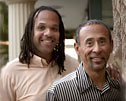














| 2005 | |||||||||||||||||
|
California - 2005 Attempted Pro-Marriage Bill Assemblyman Mark Leno proposed bill AB19, legalizing marriages of same-sex couples. Leno had proposed a similar bill last year. The bill alters the definition of marriage — a union between a man and woman — adopted by the Legislature in 1977. It does not change Proposition 22, voted in March 2000, which states that California would not recognize marriages and implies that it was for out-of-state marriages. Because Prop. 22 was a public vote, altering it requires submitting to another public voter. It appears that the California legislature cannot change this absolute refusal to recognize marriages between persons of the same sex. However, also in March 2005, the anti-marriage laws were declared unconstitutional by San Francisco Superior Court Judge Richard Kramer. The ruling did not take effect while being appealed by the state and opponents of same-sex marriage. On September 6, 2005, the California legislature acted on Leno’s pro-marriage bill, and became the first legislative body in the U.S. to allow same-sex marriages without being forced by a court ruling, as had Vermont and Massachusetts. The bill’s supporters compared the legislation to earlier civil rights campaigns, including efforts to eradicate slavery, and give women the right to vote. It passed the Senate by 21-15 and the Assembly by 41-35. In April, the San Mateo, California, Board of Supervisors voted 4-1 in favor of a resolution supporting the pro-marriage bill. In mid-September, President Rich Gordon, on behalf of the board, sent Gov. Arnold Schwarzenegger a letter asking him to sign the pending bill. On September 29, 2005 Gov. Schwarzenegger vetoed the bill. However, the California Court of Appeals ruled against the Superior Court on October 5, 2006. By a 2–1 decision, it ruled on six consolidated cases that gay and lesbian people don’t have the same fundamental legal rights as everyone else, that discrimination against them doesn’t need to be viewed with strict legal scrutiny. Justices William R. McGuiness and Joanne C. Parrilli offered the unbelievable notion that the court would be “usurping” the role of the legislature by finding that it is unconstitutional to outlaw same-sex marriage. Curiously, when the state legislature took up this issue and passed a bill, the governor vetoed it stating that he was leaving the issue to the courts. The desenting voice, Justice J. Anthony Kline, stated: “To say that that the inalienable right to marry the person of one’s choice is not a fundamental constitutional right, and therefore may be restricted by the state without a showing of compelling need, is as terrible a backward step as was the unfortunate and now overruled opinion in Bowers, supra, 478 U.S. 186. Ignoring the qualities attached to marriage by the Supreme Court, and defining it instead by who it excludes, demeans the institution of marriage and diminishes the humanity of the gay men and lesbians who wish to marry a loved one of their choice.” Maine - 2005 Attempted Pro-Marriage Bill Rep. Brian Duprey of Hampden, a conservative Republican, insists he introduced the pro-marriage bill solely at the request of a constituent, a woman who did not want her name revealed. But Duprey also said he intends to vote against his own bill, and that he will continue to push for a constitutional amendment to keep the Maine legislature from legalizing same-sex marriages. He also opposes Unions. Besides the January 2005 pro-marriage bill, the legislature will also review a bill to protect gay men and lesbians from discrimination, as well as Democratic Portland Sen. Ethan Strimling’s bill to repeal a state ban against same-sex marriage. Rhode Island - 2005 Attempted Pro-Marriage Bill
Sen. Rhoda Perry (D-Providence) and Rep. Arthur Handy (D-Cranston) presented pro-marriage bills. The Perry bill co-sponsors include three Democrat and one Republican senator. The Handy bill had 20 House sponsors, including one Republican.
Connecticut - 2005 Attempted Pro-Civil Union Bill Connecticut legislators proposed, and then approved on April 20, 2005, a Civil Union status, which can only be utilized by same-sex couples. The more than 500 rights and responsibilities triggered by legal marriage are available to those who reside in Connecticut. [Please see our article: Civil Unions: The Connecticut Approach] Oregon - 2005 Attempted Pro-Civil Union Bill Senate Bill 1000, introduced in April 2005, would provide Civil Unions, as well as prohibit discrimination against gays and lesbians in employment, housing, and other areas. Governor Ted Kulongoski supports the bill, which is sponsored by a bipartisan group of state senators. Conservative, anti-gay groups claims that the bill goes further with Civil Unions than anything that has been proposed in other states, plus it goes further than Oregonians intended when voters endorsed Measure 36, the anti-marriage state constitutional amendment. Supportive Legal Marriage Activities Brighton, Buffalo, Ithaca, Rochester, New York City, Nyack On April 7, 2005, New York City joined the other New York State cities of Buffalo, Rochester, Brighton, Ithaca and Nyack by announcing that it will fully respect the marriages and civil unions of same-sex couples performed in jurisdictions such as Massachusetts, Vermont, Canada and other countries. California - 2005 Suit Arthur Smelt and Christopher Hammer, together since 1997, suied in federal court, using the argument that the U.S. Constitution’s equal rights guarantee forbids laws against same-sex marriage. In Smelt v. Orange County, U.S. District Judge Gary Taylor ruled against the couple, in June 2005, upholding the federal law and declined to consider the California law. The judge stated that the government’s desire to promote procreation was a valid reason for infringing on the rights of gay men and lesbians. Of course, no marriage license requires that couples produce babies, so his rationale appears disingenuous In a hearing, held on April 4, 2006 by the 9th U.S. Circuit Court of Appeals, two of the three judges suggested the men may have lost their right to challenge the federal law because a technicality. In December 2004, the couple had filed a disolution of their domestic partnership status, and wanted their marriage to be recognized. They did not notify U.S. District Judge Gary Taylor, who ruled in 2005 that their status as domestic partners gave them legal standing to challenge the federal statute. Judge Sidney Thomas stated that legal standing was predicated on the legitimacy of the domestic partnership. With that domestic partner status apparently withdrawn, he said, “why shouldn’t we abstain and let the California courts decide all this?” Judge Ferdinand Fernandez observed that they could re-register as domestic partners if they wanted to clear up doubts about their status. Christopher Hammer later told reporters that they would consider a return to domestic partner status. The lawsuit was one stop short of the Supreme Court. However, because there are not enough positive, pro-marriage rulings on the state level, and the national awareness is still against marriage equality, it is unlikely that a positive ruling would result, and it could, in fact, produce a negative law creating even more barriers to protecting our families. In May 2006, the ninth U.S. circuit court of appeals, often characterized as one of the most liberal courts in the country, dismissed the case.
On October 10, 2006, the U.S. Supreme Court declined to hear an appeal.
Iowa - 2005 Suit This case won the legal right for same-sex couples to marry on April, 2009. [Please see: Iowa Offers Legal Marriage] On December 13, 2005, Varnum v. Brien was filed on behalf of six couples by Lambda Legal. This case won in the Iowa District Court for Polk County, on August 30, 2007. Details following the couples’ images. [Please see our article on this case: IA - Varnum v. Brien] Camilla Taylor, Staff Attorney in Lambda Legal’s Midwest Regional Office in Chicago: “This lawsuit is about fairness and equality. Same-sex couples all over Iowa are devoted and love each other. Since marriage is the way the government provides protection, support and respect for families, it is only fair that these couples be able to marry.”
Varnum v. Brien was opened on December 13, 2007. Attorneys in case were Camilla Taylor, Kenneth D. Upton, Jr. from Lambda Legal, and co-counsel/cooperating attorneys were Dennis Johnson of Dorsey and Whitney in Des Moines, Iowa. On behalf of six same-sex couples who sought to marry in Iowa, the lawsuit argued that, under the equal protection and due process guarantees of the Iowa Constitution, it is unlawful to bar same-sex couples from marrying. The couples in this case have been together between five and more than 16 years. Three of the couples are raising children, others are planning families, and all want the responsibilities of marriage, and the protections only marriage can provide. This case won on August 30, 2007, when a 63-page decision was issued by the Iowa District Court for Polk County, which stated that same-sex couples must be allowed to marry based on the Iowa Constitution’s guarantee of equal treatment under the law. The case awaits a final ruling from the Iowa Supreme Court.
This case finally won the legal right to marry on April 3, 2009. The law became effective on April 27, 2009.
| |||||||||||||||||
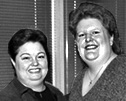





| 2006 |
|
California - 2006 Pro-Marriage Bill On December 4, 2006, Assemblyman Mark Leno (D-San Francisco) filed his third attempt to pass a marriage bill that included same-sex couples. Leno formally submitted AB43, which is officially known as the “Religious Freedom and Civil Marriage Protection Act.” The bill would require the state to offer gender-neutral marriage licenses to couples. Leno waited until after the 2006 elections to bring the bill back. The new Democratic lawmakers in the Assembly overwhelmingly supports the bill, with 44 lawmakers already pledging to vote for it. A bill needs 41 votes to pass out of the lower chamber. New Jersey - 2006 Pro-Marriage Bill On November 10, 2006, Assemblyman Reed Gusciora (D) proposed a bill that followed October’s state Supreme Court ruling that same-sex couples must have all the rights of marriage. The Court gave the New Jersey State Legislature 180 days to act on the decision to grant same-sex couples the rights and benefits enjoyed by opposite-sex married couples, but left it up to the legislators to decide whether to call it marriage or civil unions. Stated Gusciora: “If you want to fulfill the spirit and the decision of the Supreme Court without creating a system of separate but equal, just any two consulting adults who want to obtain a state marriage would get a civil marriage.”Called the “Civil Marriage and Religious Protection Act,” it opens up marriage to same-sex couples, and also states that churches are not required to conduct marriage ceremonies if they don’t want to. No church has ever been required to do so. The bill would allow civil officiants to perform the ceremonies for a $50 fee that would go to property tax reform. Rhode Island - 2006 Pro-Marriage Bill Sponsored in the House by Rep. Arthur Handy (D-Cranston) in January 2006. In 2005, 21 of the 75 House members signed onto the bill. In 2006 there are 23 co-sponsors. Similar bills have been introduced almost every year, since 1998. Sponsored in the Senate by Sen. Rhoda Perry who said: “No state should commit or condone discrimination, but denying gay couples the right to marry the person they love is exactly that. This is a matter of simple fairness.” Vermont - 2006 Pro-Marriage Bill Sponsored by Rep. Mark Larson (D-Burlington) on January 26, 2006. A bill draft suggests that it would give same-sex couples the right to marry, and, secondly, it would allow clergy to refuse to perform a same-sex marriage if it violated their religious beliefs, which is already the practice for opposite-sex couples. There is no mention of the second-class status of Civil Union which is currently offered by Vermont. |
| 2007 |
|
Washington - 2007 Pro-Marriage Bill HB 1350 (Addressing civil marriage equality) was presented in the House on January 17, 2007, and sponsored by Representatives Pedersen, McDermott, Upthegrove, Moeller, Darneille, Williams, Hasegawa, Dickerson, Hunt, Schual-Berke, Kenney, Sommers, McIntire, Ormsby, Sells, Flannigan, Santos, Appleton, Chase, Cody, Hudgins, Pettigrew, Wood, Kagi, Morris, and Roberts. “AN ACT Relating to civil marriage equality, recognizing the right of all citizens of Washington state, including couples of the same sex, to obtain civil marriage licenses; amending RCW 26.04.010 and 26.04.020; and creating a new section.”SB 5335 (Addressing civil marriage equality), was presented in the Senate on January 17, 2007, and sponsored by Senators Murray, Regala, Kohl-Welles, Fairley, Prentice, Kline, Pridemore, Weinstein, Poulsen, Fraser, Jacobsen, and Keiser. “AN ACT Relating to civil marriage equality, recognizing the right of all citizens of Washington state, including couples of the same gender, to obtain civil marriage licenses; amending RCW 26.04.010 and 26.04.020; and creating a new section.” Washington - 2007 Domestic Partnership Bill SB 5336 - presented Jan 17, 2007. Sponsors: Senators Murray, Kohl-Welles, Fairley, Prentice, Regala, Oemig, Tom, Kline, Hobbs, Pridemore, Keiser, Berkey, Franklin, Brown, Weinstein, Rockefeller, Poulsen, Fraser, Jacobsen, Spanel, McAuliffe. “Protecting individuals in domestic partnerships by granting certain rights and benefits.”HB 1351 - presented Jan 17, 2007. Sponsors: Representatives McDermott, Jarrett, Pedersen, Moeller, Upthegrove, Clibborn, Darneille, Simpson, Schual-Berke, Williams, Hasegawa, Dickerson, Hunt, Kenney, Sommers, McIntire, McCoy, Roberts, Hudgins, Ormsby, Sells, Kirby, Fromhold, Blake, Eickmeyer, Haigh, Lovick, Ericks, Dunshee, B. Sullivan, P. Sullivan, Wallace, Kagi, Flannigan, Kessler, Pettigrew, Wood, Quall, Conway, Hankins, Chase, O’Brien, Eddy, Appleton, Hunter, Lantz, Springer, Walsh, Grant, Takko, Goodman, Morris, Cody, Santos, Miloscia, Linville. “Protecting individuals in domestic partnerships by granting certain rights and benefits.”This bill became law on April 21, 2007, and took effect on July 22, 2007. On March 12, 2008, a greatly expanded addition to the partnership status was made law, taking effect on December 3, 2009. [Please see: Domestic Partnership: The Washington Approach]
Colorado - 2007 Protest On September 24, 2007, a 5-year couple, Sheila Schroeder, 43, and Kate Burns, 44, were led away in handcuffs by police when they refused to leave the Denver clerk and recorder’s office after being refused a marriage certificate. |
| 2008 | ||||||||||||||||||||||||||||||||||||||||||||||
|
California - 2008 Pro-Marriage Court Finding
In re Marriage Cases was a consolidation of 6 related suit appeals. It won the right for legal marriage in California on May 15, 2008, making this the second American state — and the seventh government in the world — to offer legal marriage to same-sex couples.
For details on the case, please see our article: California Offers Marriage
The court finding:California Court Finding - the entire May 15, 2008 ruling - a 172-page PDF file. | ||||||||||||||||||||||||||||||||||||||||||||||

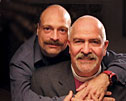







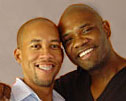






| 2009 |
|
District of Columbia - 2009 Pro-Marriage Bill On May 06, 2009, D.C. passed the “Jury And Marriage Amendment Act 2009” which become effective July 7, 2009. This allows same-sex marriage from other states to be legally recognised even though same-sex couples cannot legally marry in D.C. On October 6, 2009, D.C. Councilman David Catania introduced a bill called the “Religious Freedom And Civil Marriage Equality Amendment Act 2009” to allow same-sex couples to wed. On November 17, 2009, the D.C. Board of Ethics and Elections stated that a proposed ballot measure to halt same-sex marriage would not be allowed due to its conflicts with the Human Rights Act. They stated that putting same-sex marriage to a popular vote would be discriminatory to homosexuals.
On December 15, 2009, the D.C. Council overwhelmingly passed the Religious Freedom and Civil Marriage Equality Act of 2009. On December 18, D.C.’s Mayor Adrian Fenton signed the bill and D.C. became the 8th American government to offer full, legal marriage to same-sex couples. This is the 4th U.S. area — after Vermont, Maine (which was soon removed by ballot measure), and New Hampshire — to offer legal marriage without a court order. The law became effective on March 3, 2010. United States - 2009 Pro-Marriage Suits • Gill v. Office of Professional Management (OPM) was filed by GLAD (Gay and Lesbian Advocates and Defenders) on March 3, 1009, on behalf of eight same-sex couples and three surviving partners living in Massachusetts who were denied federal benefits available to married spouses. The suit challenged the DOMA (Defense of Marriage Act) law’s Section 3 on the basis of the 14th Amendment’s “Equal Protection” clause. On July 8, 2010, Federal Judge Joseph Tauro, of the District of Massachusetts, ruled that a key section of the federal DOMA is unconstitutional. He ruled that Section 3 of DOMA violates the Equal Protection clause of the 5th Amendment. In his decision, Tauro found that “the government’s proffered rationales, past and current, are without ‘footing in the realities of the subject addressed by [DOMA].’ “And ‘when the proffered rationales for a law are clearly and manifestly implausible, a reviewing court may infer that animus is the only explicable basis. [Because] animus alone cannot constitute a legitimate government interest,’ this court finds that DOMA lacks a rational basis to support it.” “As irrational prejudice plainly never constitutes a legitimate government interest, this court must hold that Section 3 of DOMA as applied to Plaintiffs violates the equal protection principles embodied in the Fifth Amendment to the United States Constitution.” Tauro also demolished four separate arguments that Congress had a legitimate interest in intervening in the definition of marriage to favor opposite-sex couples: “What remains, therefore, is the possibility that Congress sought to deny recognition to same-sex marriages in order to make heterosexual marriage appear more valuable or desirable. … But to the extent that this was the goal, Congress has achieved it ‘only by punishing same-sex couples who exercise their rights under state law.’ And this the Constitution does not permit.” “Neither does the Constitution allow Congress to sustain DOMA by reference to the objective of defending traditional notions of morality. … As the Supreme Court made abundantly clear in Lawrence v. Texas and Romer v. Evans, ‘the fact that the governing majority in a State has traditionally viewed a particular practice as immoral is not a sufficient reason for upholding a law.’ ” • Commonwealth v. US Department of Health and Human Services was filed on July 8, 2009, by the Massachusetts Attorney General, Martha Coakley. The suit contends that the DOMA law exceeds congressional authority in violation of the 10th Amendment. On July 8, 2010, Federal Judge Joseph Tauro of the District of Massachusetts ruled that Section 3 of DOMA also violates the 10th Amendment by usurping the rights of states to regulate marriage. In his decision to grant summary judgment to Massachusetts, Tauro first reviewed several state programs, including the MassHealth medical insurance program, where DOMA-based restrictions on federal spending impact citizens of Massachusetts. Federal Judge Joseph Tauro stated in his ruling: “In the companion case, Gill et al. v. Office of Pers. Mgmt. et al., No. 09-cv-10309-JLT (D. Mass. July 8, 2010) (Tauro, J.), this court held that DOMA violates the equal protection principles embodied in the Due Process Clause of the Fifth Amendment. That analysis, which this court will not reiterate here, is equally applicable in this case.” “Accordingly, this court finds that DOMA induces the Commonwealth to violate the equal protection rights of its citizens. … And so, as DOMA imposes an unconstitutional condition on the receipt of federal funding, this court finds that the statute contravenes a well-established restriction on the exercise of Congress’ spending power. Because the government insists that DOMA is founded in this federal power and no other, this court finds that Congress has exceeded the scope of its authority.” “That DOMA plainly intrudes on a core area of state sovereignty - the ability to define the marital status of its citizens - also convinces this court that the statute violates the Tenth Amendment.” “What remains, therefore, is the possibility that Congress sought to deny recognition to same-sex marriages in order to make heterosexual marriage appear more valuable or desirable. … But to the extent that this was the goal, Congress has achieved it ‘only by punishing same-sex couples who exercise their rights under state law.’ And this the Constitution does not permit.” Texas - 2009 Pro-Marriage (recognizing divorce) Case On October 1, 2009, Judge Tena Callahan of the Dallas County 302nd Family District Court ruled that she had jurisdiction to grant a divorce to a same-sex couple who had been legally married in Massachusetts but currently reside in Texas. Texas State Attorney General Greg Abbott (Republican) intervened in the case, arguing that Texas courts may not grant divorces to same-sex couples because the state does not recognize same-sex marriages. Regardless, Judge Callahan ruled that the court “has jurisdiction to hear a suit for divorce filed by persons legally married in another jurisdiction.” Her ruling states explicitly that the Texas law violates the equal protection clause of the 14th Amendment to the U.S. Constitution. The male couple, publicly identified only as J.B. and H.B., were married in 2006 when residing in Massachusetts. They subsequently settled in Texas. J.B., who initiated the divorce, said he and his husband jointly own a home in Dallas, stopped living together in November 2008, have no children, and have agreed to a fair division of their assets. He also wants to change back to his original surname after adopting his husband’s. The couple originally filed for a “settlement agreement,” a common legal device among same-sex couples that separate and divide assets in Texas. However, they were advised that because they were legally married in another state, they needed to obtain a divorce instead. They can not be divorced in Massachusetts because, like many states, Massachusetts requires residency to divorce. Attorney General Abbott appealed Callahan’s decision, and the all-Republican, three-judge panel of the Dallas appeals court ruled in Abbott’s favor on August 31, 2010. J.B.’s lawyer, James J. “Jody” Scheske (of Akin Gump Strauss Hauer & Feld) filed a motion requesting a re-hearing by the full 5th District Court of Appeals. A majority of the 13 justices would need to agree to rehear the case. There is no timeframe for ruling on the request. |
| 2010 |
|
United States - 2010 Pro-Marriage Suits • Pedersen v. Office of Professional Management (OPM) was filed by GLAD (Gay and Lesbian Advocates and Defenders) in the U.S. District Court for Connecticut. Joanne Pedersen, the principal plaintiff, was legally married to her spouse, Ann Meitzen, under Connecticut state law. Pedersen is a retiree from the federal Department of Naval Intelligence but has been prevented from adding Meitzen to her health insurance plan because DOMA prohibits the federal government from recognizing same-sex marriages, even when they are legal in the state in which they occurred. Other plaintiffs in the case were unable to get time off under the Family and Medical Leave Act, or benefits through Social Security. GLAD is seeking a declaration that the one-man-one-woman definition of marriage enshrined in DOMA unfairly discriminates against these plaintiffs because it denies them benefits all opposite-sex married couples can get. • Windsor v. United States, was brought by the ACLU and the law firm of Paul, Weiss, Rifkind, Wharton & Garrison in the U.S. District Court for Southern New York. Edie Windsor and Thea Spyer lived together as a committed couple for 44 years. They became a couple in 1965, got engaged in 1967, and had a legal marriage in Canada in 2007. Spyer died in 2009, and the federal government taxed Spyer’s estate as though she and Windsor were strangers rather than a married couple. Under federal tax law, a spouse who dies can leave assets, including the family home, to the other spouse without incurring estate taxes. But DOMA prevents the federal government from recognizing the survivorship rights of a same-sex spouse. Windsor had to pay $350,000 in estate taxes that she would have kept had her marriage, which was legal in Canada, been recognized in the U.S. The ACLU argued that it is a denial of the equal protection clause of the 5th Amendment to the U.S. Constitution for the federal government to pick and choose which marriages it will recognize for federal purposes, when otherwise it leaves that question entirely up to the states. On June 6, 2012, Judge Barbara Jones ruled that, based on rational basis review, section 3 of DoMA is unconstitutional and ordered the requested tax refund be paid to her. The plaintiff commented, “It’s thrilling to have a court finally recognize how unfair it is for the government to have treated us as though we were strangers.” Windsor’s attorneys filed a petition of certiorari with the Supreme Court on July 16, 2012, asking for the case to be considered without waiting for the Second Circuit’s review. On October 18, 2012, a Federal Appeals court ruled that the so-called “Defense of Marriage Act” unconstitutionally discriminates against married same-sex couples. In striking down DOMA, the court held that government discrimination against lesbians and gay men now is assumed to be unconstitutional, and that DoMA’s defenders could not offer any good reason for treating married same-sex couples differently from all other married couples. This is the first federal appeals court decision to decide that government discrimination against gay people gets a more exacting level of judicial review, known as “heightened scrutiny.” |
| 2014 |
|
United States - 2014 Pro-Marriage Suits • Brenner v. Armstrong was consolidated from Brenner v. Scott and Grimsley v. Scott on April 21, 2014. On August 21, 2014, U.S. District Judge Robert Lewis Hinkle found that the state’s constitutional and statutory bans on same-sex marriage violate the Due Process and Equal Protection Clauses. He stayed enforcement of his ruling temporarily. The state defendants appealed the case to the Eleventh Circuit Court of Appeals. The state’s requests to have the district court’s injunction stayed pending appeal were rejected by the Eleventh Circuit on November 19, 2014 and by the Supreme Court on December 19, 2014. On December 23, 2014, the Washington County Clerk of Court, a named defendant whom Hinkle’s injunction orders to issue a marriage license to one of the plaintiff couples, filed an emergency request asking Hinkle if she was also required to issue marriage licenses to all qualified same-sex couples once his injunction takes effect. After briefing by all the parties, on January 1, 2015, Judge Hinkle clarified his injunction, writing that his order applied only to the named defendants, but that his ruling explained that the U.S. Constitution required all clerks to issue marriage licenses to same-sex couples. He warned them of the many expensive lawsuits that would ensue if any refused to do so. National Center for Lesbian Rights provided attorneys for this lawsuit in Maimi-Dade. Shannon Minter, legal director for NCLR: “This is a pivotal moment not just for Miami but for the entire country. Florida is a bellwether state, and I can think of no more encouraging sign as the US Supreme Court prepares to decide whether to resolve this issue for the entire country at its next conference on January 9, and as the Fifth Circuit Court of Appeals hears oral arguments in the Texas, Mississippi, and Louisiana marriage cases the same day. This is an incredibly important week for marriage equality, and we are so thrilled that Miami couples are leading the charge.”On June 26, 2015, the United States Supreme Court declared that denying same-sex couples the freedom to marry violates the U.S. Constitution. This decision extends the freedom to marry to all same-sex couples nationwide. This ruling was followed by several states breaking the law and continuing to deny legal marriage for same-sex couples, as well as numerous legislations attempts that were designed to damage the lives of LGBT people. Since 2013 — two years before the right to marry was obtained — there has been a record-breaking introduction of 254 anti-gay bills in many U.S. states. These include 104 based on religious exemptions, 34 in order to segregate transgender peoples, 62 in order to refuse marriage to same-sex couples, and 54 miscellaneous anti-gay laws. Of those bills, 20 have been signed into law. There are still 48 active bills (as of July 1, 2016). [See “The Dramatic Rise in State Efforts to Limit LGBT Rights” by Everdeen Mason, Aaron Williams and Kennedy Elliott, Washington Post, July 1, 2016] |
and corroborating references: demian@buddybuddy.com
Please do not reproduce this article by any form of reproduction without permission.
Please do not copy this to other Web sites or by any other electronic means.
| Governments that offer Full Legal Marriage | ||
|
Nations . Netherlands (2001) Belgium (2003) Canada (2005) Spain (2005) South Africa (2005) Norway (2009) Sweden (2009) Iceland (2010) Argentina (2010) Portugal (2010) Denmark (2012) France (2013) New Zealand (2013) Brazil (2013) Uruguay (2013) New Zealand (2013) United Kingdom (England, Wales) (2013) Luxembourg (2014) Finland (2014) Scotland (2014) Ireland (2015) Greenland (2015) United States (2015) Colombia (2016) Germany (2017) Malta (2017) Australia (2017) Austria (2019) Taiwan (2019) Ecuador (2019) Costa Rica (2020) Chile (2022) Estonia (2023) Nepal (2023) Greece (2024) |
US States . U.S. Supreme Court, June 26, 2015 Ruling: All States must allow legal, same-sex marriage. . These states had legal marriage before the ruling: . Massachusetts (2004) California (2008) Connecticut (2008) Iowa (2009) Vermont (2009) New Hampshire (2009) District of Columbia (2009) New York (2011) Maine (2012) Washington (2012) Maryland (2013) Rhode Island (2013) Delaware (2013) Minnesota (2013) Illinois (2013) Utah (2013) New Jersey (2013) Hawaii (2013) New Mexico (2013) Michigan (2014) - stayed pending legal challenge Oregon (2014) Wisconsin (2014) Arkansas (2014) - stayed pending legal challenge Pennsylvania (2014) Indiana (2014) Nevada (2014) Virginia (2014) Oklahoma (2014) Idaho (2014) West Virginia (2014) Alaska (2014) Arizona (2014) Wyoming (2014) Kansas (2014) - stayed pending legal challenge Florida (2014) Colorado (2014) North Carolina (2014) South Carolina (2014) Montana (2014) Alabama (2015) |
Native American Tribes . Coquille Tribe, Oregon (2009) Mashantucket Pequot Tribe, Connecticut (2010) Suquamish Tribe, Washington (2011) Port Gamble S’Klallam Tribe, Washington (2011) Little Traverse Bay Bands of Odawa Indians, Michigan (2013) Pokagon Band of Potawatomi Indians, Michigan (2013) Santa Ysabel Tribe, California (2013) Confederated Tribes of the Colville Reservation, WA (2013) Cheyenne & Arapaho Tribes, Oklahoma (2013) Leech Lake Band of Ojibwe, Minnesota (2013) Grand Portage Band of Chippewa, Minnesota (2013) Puyallup Tribe of Indians, Washington (2014) Salt River Pima-Maricopa Indian Community, Arizona (2014) Wind River Indian Reservation, Wyoming (2014) Blackfeet Indian Reservation, Montana (2014) San Carlos Apache Tribe, Arizona (2014) Fort McDermitt Paiute & Shoshone Tribes, OR & NV (2014) Fort McDowell Yavapai Community, Arizona (2014) Lac du Flambeau Band of Lake Superior Chippewa, WI (2014) Fond du Lac Band of Lake Superior Chippewa (2014) Keweenaw Bay Indian Community (2014) Pascua Yaqui Tribe (2014) Confederated Tribes of Coos, Lower Umpqua, & Siuslaw Indians (2014) Central Council of Tlingit & Haida Indian Tribes, Alaska (2015) Oneida Nation, Wisconsin (2015) Confederated Tribes of Siletz Indians (2015) Chemehuevi Indian Tribe (2015) Confederated Tribes of Grand Ronde (2015) Sault Ste. Marie Tribe of Chippewa Indians (2015) Stockbridge-Munsee Tribe (2016) Oglala Sioux Tribe (2016) Tulalip Tribe, Washington (2016) Menominee Nation (2016) Cherokee Nation (2016) |